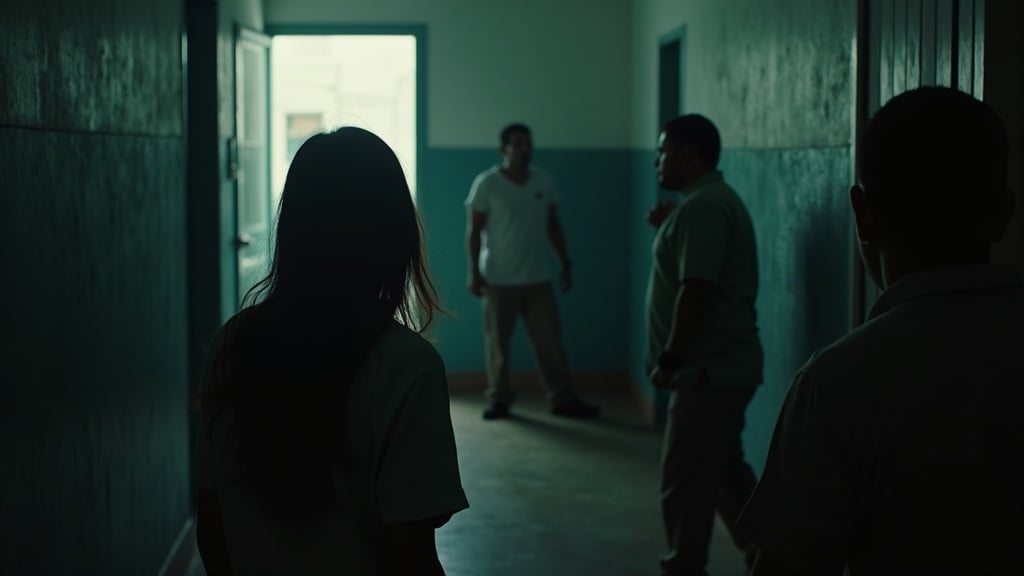
nmates at Venezuela's Barinas prison have taken to the prison roof, setting fire to mattresses to protest against alleged abuse by guards and prison staff. The protest, which occurred on Sunday, has drawn attention to the dire conditions within the facility and the broader issue of prison violence in the country.
The protest is part of a growing wave of inmate unrest in Venezuela, where overcrowding, poor conditions, and violence are rampant. The inmates are calling for the removal of the prison's director, accusing him of overseeing guards who have shot unarmed prisoners. A video shared by the Venezuelan Observatory of Prisons shows a man with a bullet wound in his chest, further fuelling the inmates' claims of abuse.
Venezuela's prison system has long been a subject of international concern. Overcrowding, underfunding, and a lack of proper oversight have created a volatile environment where violence is common. The government has faced criticism for its handling of the prison crisis, with human rights organisations calling for urgent reforms.
The protest at Barinas prison began when inmates claimed they were peacefully demonstrating against the conditions when prison staff opened fire, leaving some wounded. In response, the inmates moved to the roof, where they set fire to mattresses and called for the prison director's removal. The Venezuelan Observatory of Prisons, a local NGO, shared a video of the protest on X, showing the extent of the inmates' grievances.
The situation at Barinas prison highlights the systemic issues within Venezuela's prison system. Overcrowding is a significant problem, with many facilities housing far more inmates than their capacity allows. This leads to a lack of basic amenities, including proper medical care, sanitation, and food. The guards, often poorly trained and underpaid, resort to violence to maintain control, leading to a cycle of abuse and retaliation.
The inmates' protest is a stark reminder of the need for comprehensive prison reform in Venezuela. The government must address the root causes of the crisis, including overcrowding, underfunding, and lack of oversight. Without significant changes, the situation is likely to worsen, leading to further violence and human rights abuses.
The protest at Barinas prison is a clear sign that the inmates are willing to take extreme measures to draw attention to their plight. The government's response will be crucial in determining the next steps. If the authorities ignore the inmates' demands, the situation could escalate, leading to more violence and instability. On the other hand, if the government takes the inmates' concerns seriously and implements meaningful reforms, it could help to alleviate the crisis and improve conditions for all inmates.
What is at stake is not only the well-being of the inmates but also the stability of the prison system as a whole. The inmates' protest has highlighted the urgent need for action, and the government must rise to the challenge. The international community will be watching closely, and any failure to address the crisis could have serious repercussions for Venezuela's reputation and stability.
In the coming days, the government is expected to respond to the inmates' demands. Whether they choose to engage in dialogue or resort to force will be a critical indicator of their commitment to reform. The inmates, for their part, have shown they are willing to continue their protest until their grievances are addressed. The situation remains tense, and the outcome will have significant implications for the future of Venezuela's prison system.