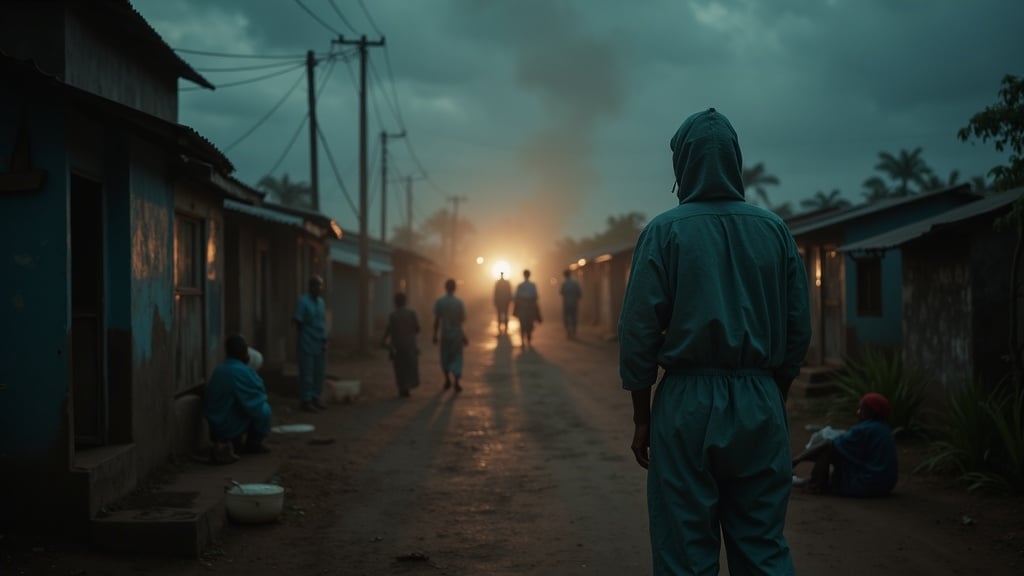
he World Health Organization (WHO) has warned that the Ebola outbreak in the Democratic Republic of Congo (DRC) is outpacing response efforts, with neighbouring countries now at high risk. Dr Tedros Adhanom Ghebreyesus, WHO’s director-general, urged immediate action from countries bordering the DRC. This development underscores the escalating nature of the crisis and the urgent need for a coordinated international response.
Ebola, a highly contagious and often fatal virus, has historically posed significant challenges to public health systems. The current outbreak, which began in August 2018, has seen a sharp rise in cases, particularly in the eastern provinces of the DRC. The region’s instability, compounded by ongoing conflict and displacement, has hampered efforts to contain the virus. The WHO’s warning signifies a critical juncture in the battle against this deadly disease.
The Ebola virus, first identified in 1976 near the Ebola River in what is now the DRC, has since caused several outbreaks across Africa. The virus spreads through direct contact with bodily fluids of infected persons or animals. Symptoms include fever, severe headache, muscle pain, weakness, diarrhoea, vomiting, abdominal pain, and unexplained haemorrhage. The current outbreak is the second-largest in history, following the 2014-2016 West Africa epidemic that claimed over 11,000 lives.
Efforts to control the outbreak involve a multifaceted approach. Health workers are racing against time to identify and isolate cases, trace contacts, and administer experimental vaccines and treatments. The WHO, alongside international partners, is scaling up operations, deploying additional personnel, and providing essential supplies. However, the volatile security situation in the eastern DRC has made it difficult to reach affected communities, exacerbating the spread of the virus.
Dr Tedros emphasised the need for neighbouring countries to enhance their surveillance and preparedness. “We are urgently scaling up our operations, but at the moment the epidemic is outpacing us,” he said. Rwanda, Uganda, and South Sudan are particularly vulnerable due to their proximity and porous borders with the DRC. These countries are now on high alert, implementing stringent border controls and health screenings.
The current outbreak has seen over 2,000 confirmed and probable cases, with more than 1,300 deaths reported. The virus has spread to urban areas, complicating containment efforts. The use of an experimental vaccine, rVSV-ZEBOV, has shown promise, but its deployment is challenged by logistical and security issues. Additionally, community resistance and misinformation have hindered vaccination campaigns.
The escalating Ebola crisis in the DRC presents a grave threat not only to the region but to global health security. The virus’s ability to cross borders underscores the interconnectedness of public health systems worldwide. The international community must rally behind the WHO’s call for action, providing both financial and logistical support to bolster response efforts.
At stake is the potential for a widespread epidemic that could overwhelm health systems, strain resources, and lead to significant loss of life. The gains made in previous outbreaks, such as the development of effective vaccines and treatments, are at risk if the current epidemic is not brought under control. Key players, including the WHO, international donors, and neighbouring countries, must coordinate their efforts to prevent further spread.
What to watch in the coming weeks will be the effectiveness of the scaled-up response efforts, the cooperation of affected communities, and the ability of neighbouring countries to implement robust preventive measures. The success of these efforts will determine the trajectory of the outbreak and its impact on the region.
As the situation evolves, the focus will remain on containing the outbreak, supporting affected communities, and preventing further spread. The international community’s response in the coming days will be critical in determining the outcome of this public health emergency.