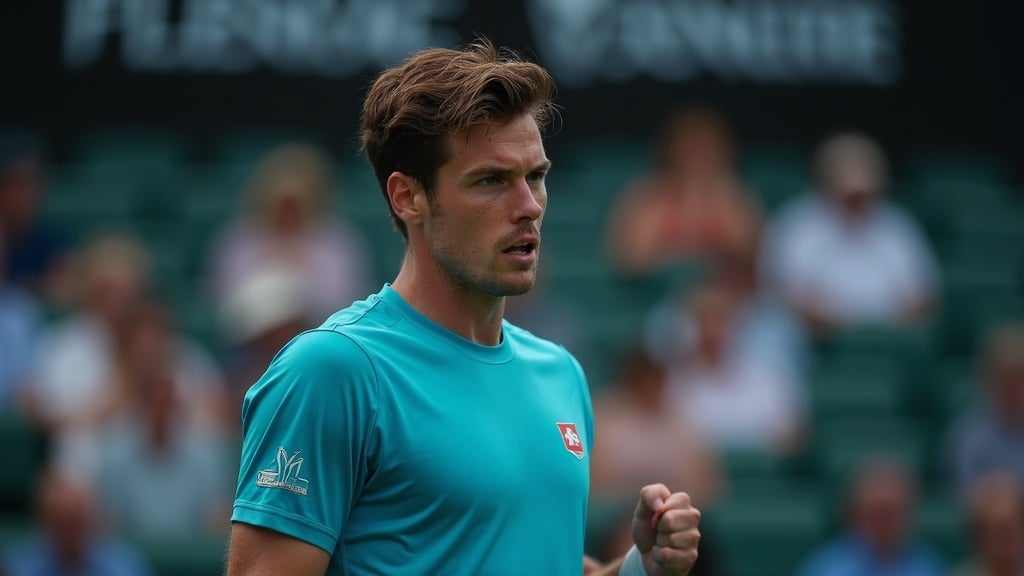
ameron Norrie's French Open campaign ended abruptly on Monday as the British number one retired injured during his first-round match. This marks the first time Norrie has been forced to withdraw from a Grand Slam due to injury. The 28-year-old, known for his resilience and fighting spirit, was visibly in distress as he called it quits against Spanish opponent Alejandro Davidovich Fokina.
Norrie's withdrawal is a significant blow, not just for his fans but for the British tennis contingent as well. His consistent performances on the ATP Tour have made him a poster boy for British tennis, a sport that has seen a resurgence in recent years thanks to players like Andy Murray and Emma Raducanu. Norrie's absence from Roland Garros leaves a void, especially as he was tipped by many to make a deep run in the tournament.
The context surrounding Norrie's injury is crucial for understanding the magnitude of this setback. Having reached the quarter-finals at the Australian Open earlier this year, Norrie had established himself as a genuine contender on the Grand Slam stage. His clay-court game, built on a solid baseline and relentless work ethic, had shown marked improvement, making him a dangerous opponent on any surface. This injury, therefore, is not just a hiccup but a potential derailment of his momentum.
During the match, Norrie appeared to be struggling with a foot injury. He received on-court medical attention but was unable to continue, much to the disappointment of the Parisian crowd. The specific nature of the injury remains unclear, though initial reports suggest it could be a muscle strain. Norrie's decision to retire was a prudent one, aimed at preventing further damage that could jeopardise his season.
The sequence of events leading up to Norrie's retirement was disheartening. He started the match strongly, breaking Davidovich Fokina's serve early on. However, his movement began to falter as the match progressed. The pain was evident, and despite his best efforts to soldier on, Norrie knew he could not compete at the level required to win a Grand Slam match. His retirement, though heartbreaking, was a testament to his maturity and understanding of the long-term implications of pushing through injury.
In the broader scheme of things, Norrie's withdrawal raises several questions. What does this mean for his Wimbledon preparations? Will he be fit in time for the grass-court season? These are concerns not just for Norrie but for British tennis fans who have pinned their hopes on him. His absence also opens up opportunities for other British players to step up and fill the void.
The injury could also have psychological implications. Grand Slam retirements are rare for Norrie, and this experience might affect his confidence going forward. However, those who know him well are optimistic. Norrie has shown remarkable mental toughness in the past, and this setback could serve as a motivator rather than a deterrent.
Looking ahead, all eyes will be on Norrie's recovery. The coming weeks will be crucial in determining whether he can return to action in time for Wimbledon. For now, the tennis world waits with bated breath, hoping that the British star can overcome this hurdle and continue his ascent in the sport.