The president said what he said
The US president is in the Republic of Ireland. His visit is a private one. It will last two days. Donald Trump arrived on Saturday for the final, decisive weekend of the Irish Open golf tournament. The entire trip is centred on his own commercial property, the expansive Trump International Golf Links and Hotel at Doonbeg in County Clare, which is hosting the prestigious sporting event. His official public role was meant to be straightforward and apolitical. He is there to watch the closing stages of the competition from his own resort and to present the winner’s trophy on Sunday afternoon. The journey was not framed as a formal state visit, but as a simple weekend stay connected to his business portfolio and his personal enthusiasm for golf.
That carefully managed plan lasted only a few hours. A major diplomatic row began on Saturday evening. The controversy was ignited by the president himself. Speaking to a group of reporters at his Doonbeg resort hours after landing in Ireland, Mr Trump offered his explicit personal backing for a united Ireland. He stated clearly that he would 'love to see' the unification of the island happen. He did not stop there. The president continued, describing the prospect of a single Irish state as 'a very cool thing'. In a final, unscripted remark that caused immediate alarm in London diplomatic circles, he claimed that such a constitutional outcome was 'inevitable'. A sitting American president, on European soil, had declared the eventual breakup of the United Kingdom to be a certainty.
The comments triggered an immediate and severe political controversy. They completely overshadowed the golf. The stated purpose of the two day trip was almost instantly forgotten as diplomatic channels between Washington and London began to process the full impact of the president’s words. Sources confirm the remarks have already strained relations. Mr Trump did turn his attention back to the tournament after making the statements. He spent the rest of his Saturday watching the play unfold across the Doonbeg links course. The story had already changed. The visit was no longer about sport. It was now an incident that had produced a significant and unwelcome stress on the relationship between the United States and its closest ally.
On Sunday, the president continues his Irish visit. He is expected to follow the final round of the Irish Open from his vantage point at the resort. The day is scheduled to end, as originally planned, with a trophy presentation ceremony where Mr Trump will hand the prize to the 2026 champion. But the context for these seemingly simple events has been completely transformed by the political firestorm he created himself. What was intended as a low key weekend of sport and leisure became a point of intense diplomatic friction. The words were said. They cannot be retracted. The remainder of the president’s trip now proceeds under the long shadow of a major international incident.
Washington has a history here
American presidents have a long history in Ireland. It is not new. The interest stretches back for more than a century, driven by the powerful electoral mathematics of the Irish American diaspora. Millions of voters who trace their heritage to Ireland have consistently ensured that occupants of the White House pay close attention to events across the Atlantic. This has often been a delicate balancing act, with administrations attempting to satisfy domestic political demands without antagonising the United Kingdom. The relationship required careful management. It demanded caution. For decades, presidents navigated this complex issue with meticulously chosen words, fully aware of the diplomatic sensitivities involved in the politics of the island.
The apex of this American engagement arrived during the presidency of Bill Clinton. His administration became deeply involved in the Northern Ireland peace process. It was a calculated intervention. The White House invested immense political capital in brokering a deal, appointing former senator George Mitchell as its special envoy. Mr Mitchell went on to chair the exhaustive multi party negotiations that eventually delivered the Good Friday Agreement in 1998. The American approach was defined by balance. It was not about taking sides. Mr Clinton’s team engaged with Downing Street, with the government in Dublin, and with all the political parties in Belfast, from staunch unionists to committed republicans. This strategy was based on building trust and acting as a facilitator.
That process created a firm diplomatic protocol. It has guided American policy for a generation. Washington backs the Good Friday Agreement. It also backs the principle of consent. This is the crucial guarantee, central to the 1998 deal, that states Northern Ireland’s constitutional future can only be decided by the democratic vote of its people. The policy was clear. It was a bipartisan consensus, upheld by both George W. Bush and Barack Obama after Mr Clinton left office. The American position was to be a friend to the peace process. It was not to be an advocate for one side’s victory. This neutrality allowed the US to retain credibility with all communities and to act as a stabilising influence when political tensions rose.
Donald Trump’s remarks abandoned this entire tradition. He did not do it subtly. His statement endorsing Irish unity was a complete departure from the established policy of every president since the 1990s. The comments from his Doonbeg golf resort bypassed the whole diplomatic architecture that had been so carefully constructed around the principle of consent. There was no mention of the Good Friday Agreement. There was no acknowledgement of the need for cross community support. He simply voiced his personal preference for one outcome. He declared it inevitable. The statement was a breach of protocol that upended decades of cautious, bipartisan American diplomacy in a few casual sentences.
The comment creates a problem for London
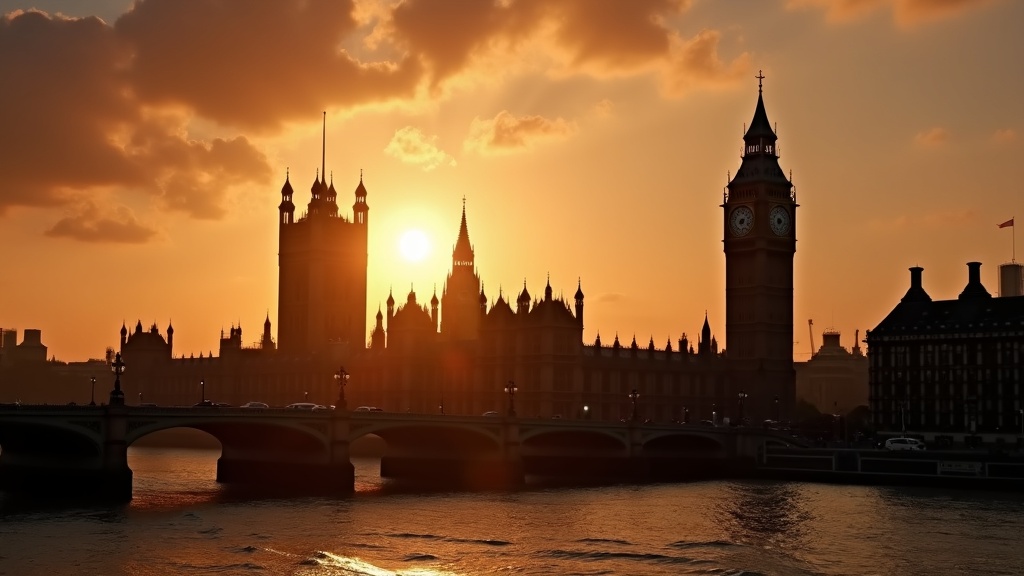
For the government in London, the comments are a direct challenge. A major problem. The president of the United States, Britain’s most important international partner, has publicly supported the breakup of the United Kingdom. Such a statement, delivered from his Doonbeg golf resort in Ireland, places an immediate and severe strain on the diplomatic relationship between Washington and London. It is a fundamental breach of protocol. Presidents do not normally comment on the potential dissolution of allied states. Mr Trump did. His words created an instant crisis for Downing Street.
The statement also ignores the agreed process for deciding Northern Ireland’s future. It disregards the principle of consent. This is the legal and political foundation of the Good Friday Agreement, the 1998 peace accord which the US helped to broker and has supported for almost thirty years. That agreement states explicitly that Northern Ireland’s constitutional status as part of the United Kingdom can only change with the consent of a majority of its population, expressed through a democratic vote. Mr Trump’s remarks about unity being ‘inevitable’ and a ‘very cool thing’ treat the outcome as a certainty, bypassing the entire legal and political framework established by the treaty. The democratic process was dismissed. His personal view was stated instead.
This puts the British government in a difficult position. An impossible position. Downing Street must respond to reassert its longstanding policy on Northern Ireland and reassure people, particularly unionists, that the principle of consent remains the only path to constitutional change. It cannot allow a statement from a US president advocating the breakup of the country to stand unchallenged on the world stage. At the same time, officials will be desperate to avoid a public confrontation with the White House, given the importance of the American alliance for British security, trade and intelligence sharing. The government has to correct the record. It has to do it quietly.
The challenge for British diplomats is acute. The president’s words were spoken during a two day visit to Ireland. He was there to watch the Irish Open. The setting was his own golf resort. The remarks may have been unscripted, a casual opinion offered to reporters between rounds of golf rather than a deliberate shift in American foreign policy. But the intention is secondary. The effect is what matters. A US president publicly backed one side in a deeply contested constitutional question, ignoring the peace treaty his own country helped to secure. That statement is now a political fact. It creates a problem for London that cannot be wished away.
It changes the weather in Belfast
The effect in Belfast is immediate. It is also profound. For nationalist politics, the president’s comments are a strategic gift, a completely unexpected endorsement delivered from outside the usual channels of Irish American lobbying that have for decades sought to influence the White House. Sinn Féin and other republican groups now possess a powerful piece of evidence to support their primary claim, that Irish reunification is not a distant dream but an approaching political reality. His words were a prize. They will use the term ‘inevitable’ as a tool to build momentum for a border poll, arguing that even a Republican American president can see the direction of travel. The phrase ‘a very cool thing’, spoken casually at a golf tournament, becomes a legitimising statement they can deploy in debates at Stormont, in election literature and in conversations with international partners. It energises their base.
For unionists, the statement is a catastrophe. It is a betrayal. The United States is not just any country, it is the co sponsor of the peace process and the United Kingdom’s most important global ally. For its sitting president to advocate the breakup of the UK is a deep and wounding shock. The source makes it worse. Unionist leaders have often regarded the Republican party as more sympathetic to the British position than the Democrats, with their powerful Irish American constituencies. That assumption is now destroyed. The ground has shifted under their feet. The president’s words create a sudden and acute sense of geopolitical isolation for a community whose political identity is founded entirely on its membership of the United Kingdom.
This external shockwave travels directly into the fragile architecture of Northern Ireland’s power sharing government. Those institutions can only function when unionist and nationalist parties agree to cooperate on devolved matters like health, education and infrastructure. This requires the constitutional question to be managed, not constantly agitated. Mr Trump’s intervention obliterates that quiet arrangement. It throws a grenade into the room. Every political disagreement, no matter how trivial, now risks becoming a proxy for the larger constitutional struggle. The president’s remarks harden positions on both sides, shrinking the space available for the cross community compromise that the Good Friday Agreement demands for the assembly to function. The joint office of the First Minister and deputy First Minister, a symbol of that partnership, becomes a site of intensified conflict. An off the cuff remark at Doonbeg has destabilised the delicate internal balance of a peace process two decades in the making. The weather has changed. It is colder now.
This was probably not a plan
Was this a plan? Probably not. The statement was not delivered from the Oval Office, nor was it a considered address to the United Nations General Assembly in New York. The president was in Ireland for two days. He was at his own golf resort. He was at Doonbeg to watch the Irish Open, an event where he was expected to present the trophy to the winner on the final Sunday. This is not the context for a carefully prepared shift in American foreign policy, a move that would by necessity involve weeks of quiet consultation with the State Department, the National Security Council and British diplomats in Washington. It is the context for business promotion and sport. The remark that Irish unification was 'inevitable' and would be a 'very cool thing' was made hours into the trip. It had all the hallmarks of an unscripted moment, a characteristic piece of presidential theatre designed for the immediate audience. The man at Doonbeg was a showman speaking to a local Irish crowd, not a head of state carefully considering the seventy five year history of the special relationship or Bill Clinton’s painstakingly balanced role in the Good Friday Agreement.
This fits a familiar pattern. Foreign policy is usually a slow and cautious business. It is a world of diplomatic cables, non papers, and joint communiques where every single word is weighed for its precise meaning and potential impact on international relations. Presidents are briefed. They stick to the script. They are constrained by history and by the shared understanding between allies that has been built over decades of cooperation. Mr Trump has long rejected this entire model of statecraft. He prizes instinct over briefing papers. His method relies on spontaneity, on blunt statements that bypass the formal channels of government and aim to speak directly to a perceived public mood. It is a style that generates headlines and diplomatic headaches in equal measure, leaving officials in London, Brussels and Berlin scrambling to interpret whether a casual remark captured by a television camera constitutes a new direction for the world's only superpower. The comment on Ireland is not an isolated incident. It is the system working as designed.
The motive, however, does not matter. Any debate over whether this was a gaffe or a calculated statement is now entirely academic. The words were said. They cannot be recalled. A sitting American president has publicly endorsed the breakup of the United Kingdom, a position that no predecessor, Democrat or Republican, has ever taken. It is a political fact. It has consequences. The effect of the remark is concrete, creating a severe diplomatic problem for the government in London and fundamentally destabilising the fragile political balance that underpins the power sharing institutions in Belfast. The intent is unknowable. For the prime minister and the Northern Ireland secretary now dealing with the fallout, it is also irrelevant. The words exist independently of their speaker's intention, taking on a life of their own in news reports, in parliamentary debates and in community halls from Portrush to Crossmaglen. The damage is done. The question of why it happened is for historians. The urgent question for government is what to do next.
Sources. BBC News UK: Donald Trump continues two-day visit of Ireland. Channel 4 News: Donald Trump: A united Ireland would be ‘a very cool thing’. Al Jazeera: Trump says he would ‘love to see’ a united Ireland during Irish visit. Evening Standard: Trump continues visit to Ireland amid row over Irish unity remarks.
Analysis. Drafted with AI assistance from the sources listed above and reviewed by an editor before publication. Jnews links to the organisations it writes about.