A petition arrives for the King
A petition from Jamaica will be presented to King Charles. It is a formal government request. This action from Kingston represents a significant shift in the long campaign for reparations over the transatlantic slave trade. The Jamaican government will not be filing a conventional lawsuit, but will instead ask the King to perform a specific constitutional function. He is being asked to refer three legal questions to the Judicial Committee of the Privy Council for an advisory opinion. The answers could reshape the debate. The move is deliberate. It is a new legal strategy.
The three questions at the heart of the petition go to the root of Britain’s involvement in slavery. They are fundamental. The first question directly challenges the historical legality of the chattel slavery system under English law during the period it operated. Jamaica is asking Britain's most senior judges to determine if the practice, which treated human beings as property to be bought and sold for profit, was ever truly lawful according to the fundamental principles of the nation's own common law. A second question flows directly from the first. It asks whether the United Kingdom has a legal responsibility today to pay reparations for the enduring economic and social damage inflicted upon Jamaica. This seeks to move the argument from a moral claim to a potential legal obligation. The third part of the request, according to reports from 6 September 2026, concerns the legal foundation for reparations, asking the court to clarify the principles that should guide any such award.
This is not a conventional legal claim. The petition is not an act of litigation against the King or the British state. It is a unique constitutional manoeuvre. Jamaica is calling upon King Charles in his shared capacity as head of state for both nations to use an established power. The petition seeks clarity. The government in Kingston is leveraging the King’s dual role, placing him at the centre of a historic request for justice that spans centuries and connects the two realms. The submission is expected during a planned visit of Jamaican officials to the United Kingdom, a timing designed to maximise its political impact. By placing the document formally before the monarch, Jamaica bypasses initial political opposition and elevates the reparations issue to the highest constitutional level. It forces a choice. It demands a response.
The King's court is an old court
The legal mechanism is archaic. It is a path few have walked. Jamaica is asking the King to use a power derived from Section 4 of the Judicial Committee Act 1833, a statute nearly two centuries old. That specific provision allows the monarch, on the advice of the government, to refer any matter whatsoever to the Judicial Committee of the Privy Council for an advisory opinion. The Committee does not decide a case. It reports its view. This is the core of the strategy. It is not a lawsuit. The process avoids the conventional, and often slow, route of international tribunals by activating a direct, if dusty, channel to the apex of the British legal establishment. It is a request for guidance.
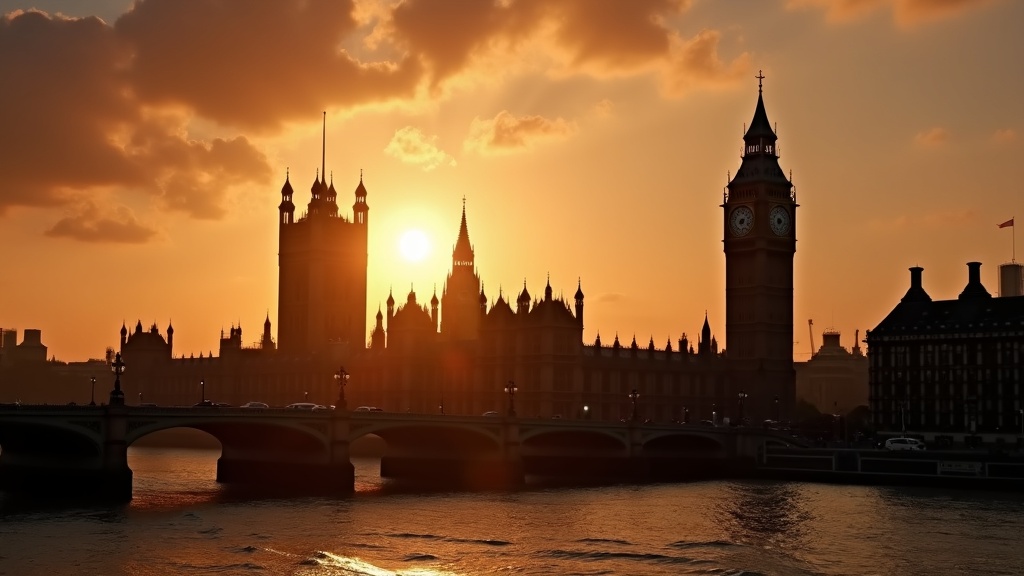
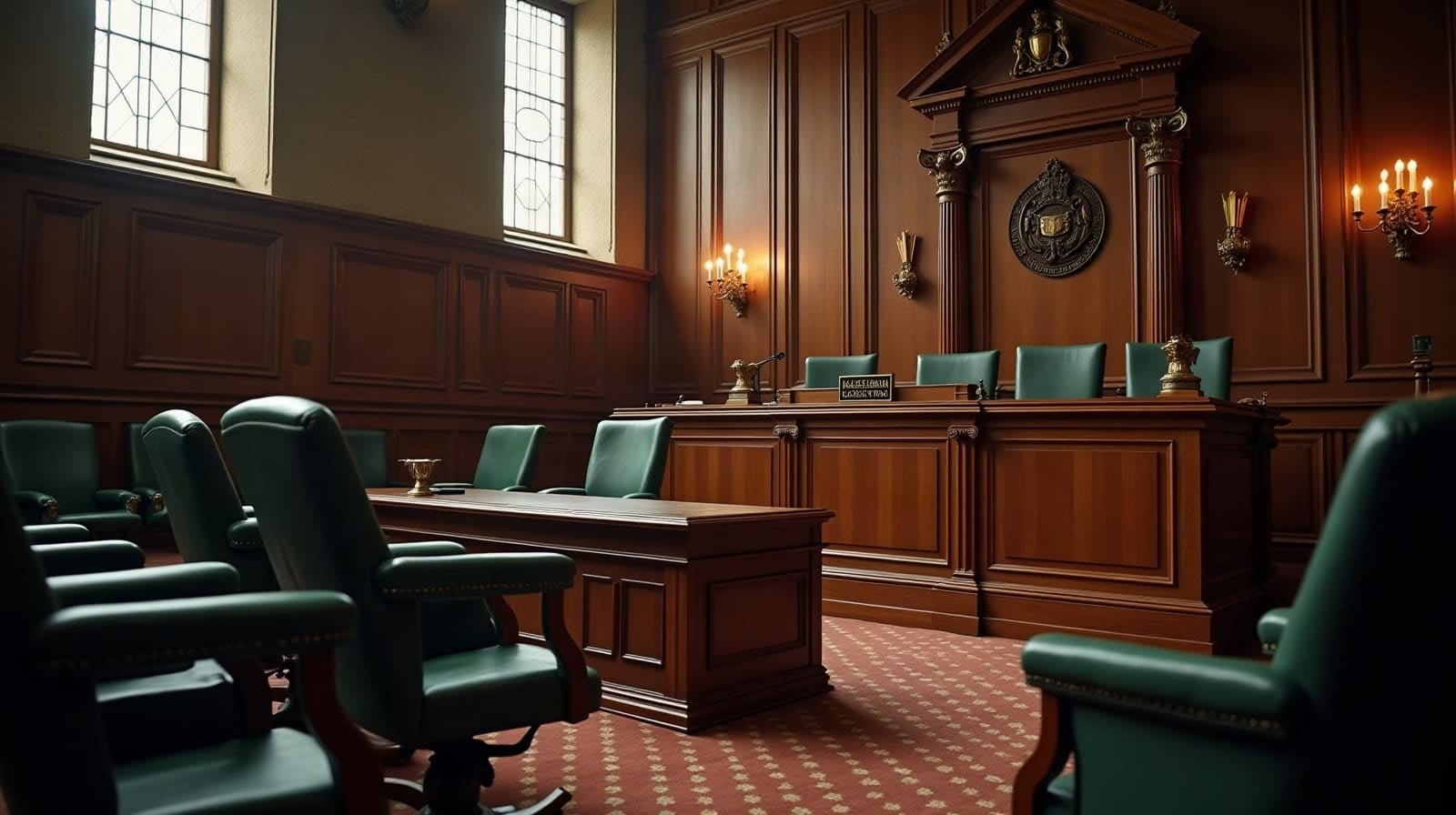
The Judicial Committee of the Privy Council, or JCPC, is the court in question. It is an institution with deep roots in the British Empire, once serving as the ultimate court of appeal for a vast portion of the globe. Today it remains the final appellate court for many Commonwealth realms, including Jamaica, as well as for the United Kingdom’s overseas territories and crown dependencies. Its judges are the same justices who sit in the UK Supreme Court, located across Parliament Square from the Houses of Parliament. They are Britain’s most senior judicial figures. Their opinions carry immense weight. This is not a foreign court.
Kingston’s petition is not an adversarial claim against the Crown. This is crucial. Jamaica is not suing King Charles. Instead, the government of Jamaica is making a formal request to its own head of state, King Charles, asking him to seek a legal opinion from a court he shares with the United Kingdom. The power belongs to the monarch. The request comes from his Jamaican government. It is a constitutional query. The procedure effectively asks the King to consult his own highest judges on a matter of profound historical and legal importance to one of his realms. It uses an ancient constitutional tool for a modern purpose.
An advisory opinion from the JCPC is not legally binding in the same way as a judgment from a regular court case would be. The government is not compelled by law to follow it. A report is made. Nothing more is required. However, an opinion from the nation’s most senior judges affirming a legal basis for slavery reparations would create extraordinary political and moral pressure on any UK government, regardless of its party. A refusal to even ask the question poses its own problems. The choice to use this specific legal instrument, the Section 4 referral, is a calculated one. It is designed to be difficult to dismiss. It forces an answer.
This argument is centuries old
This argument is centuries old. Jamaica's petition is the most recent move in a campaign for reparatory justice which has steadily gathered momentum across the Caribbean. It is not an isolated plea. The island nation is part of the Caribbean Community, or CARICOM, a bloc of twenty countries that has organised a unified front on the issue. This group established a reparations commission. They created a detailed framework. Their Ten-Point Plan for Reparatory Justice forms the foundation of the current demands and it seeks more than just financial compensation. The plan calls for a full formal apology, debt cancellation, and technology transfers to help close the development gap left by centuries of exploitation.
The core of the historical grievance dates back to the abolition of slavery itself. Specifically, it goes back to 1837. This was the year the British government began paying compensation for emancipation. The money did not go to the freed slaves. Not one penny. Instead, the government chose to compensate the 46,000 slave owners for the loss of what the law then considered their property. The sum was vast. The government borrowed £20 million, an extraordinary figure which represented forty percent of the Treasury’s total annual income at the time. Today its value would be counted in tens, possibly hundreds, of billions of pounds. This money was distributed among thousands of claimants, from powerful aristocrats with sprawling plantations to smaller merchants who owned just one or two people. The 800,000 emancipated African people received nothing. They were given their freedom but no resources to build a new life, and were instead often bound to a system of unpaid ‘apprenticeship’ that looked very much like continued slavery.
That £20 million loan did not simply vanish from the public accounts after it was paid out to the slave owners. It was folded into the United Kingdom’s national debt. It stayed there for 178 years. Generations of British taxpayers, including many who were descendants of the enslaved themselves, helped to service the debt created to enrich the enslavers. The Treasury confirmed it. The final payment on this specific loan was made by UK taxpayers as recently as 2015. This revelation, when it became widely known, brought the economic legacy of slavery into sharp, uncomfortable focus for a modern Britain. It is this specific financial transaction, the state sponsored compensation of masters instead of the enslaved, that provides a key pillar for Jamaica’s legal argument. It is a debt. They say it is still owed.
The Palace has few good options
This petition creates a political problem. It is a problem for the King. King Charles, however, will not be the one to solve it. As a constitutional monarch, he is bound entirely by the advice of his ministers, a rigid convention that removes any personal discretion in matters of state like this. The choice to grant or refuse Jamaica's request will therefore be made not in Buckingham Palace, but in Downing Street by the prime minister and his cabinet. The petition is formally presented to the monarch. The reply comes from the government. This constitutional arrangement, usually a source of stability, now forces the King into a public conflict of duty. He is being asked by his government in Jamaica to do something that his government in the United Kingdom will almost certainly advise against. He has no real choice.
The British government has a very clear answer on reparations. That answer is no. This has been the consistent policy for decades, with both Conservative and Labour administrations flatly rejecting the principle of financial compensation for the historic injustice of slavery. The argument from Whitehall is that it is not practical or fair to hold the current generation of taxpayers responsible for events that took place two centuries ago. For any prime minister, be it Rishi Sunak or a future Keir Starmer, authorising a legal process that could legitimise claims for trillions of pounds would be an act of immense political risk. The subject is radioactive. Domestic priorities, like funding for the NHS, managing inflation, or reducing taxes, dominate the political conversation, and diverting attention to historical reparations is seen as a certain vote loser. The calculation is simple. The voters would not accept it.
Yet a simple refusal is also fraught with peril. It is not straightforward. A flat no from London creates its own set of problems, extending far beyond the UK’s relationship with Jamaica. The move would risk severe diplomatic fallout. This is because the King is not only the sovereign of the United Kingdom but also the head of state for fourteen other independent nations, many of them in the Caribbean. A decision by his British government to block a constitutional request from his Jamaican government would place him in an extraordinary and contradictory position. It would provide powerful ammunition for republican campaigners who argue that retaining the British monarchy as head of state is an anachronism. The King’s position is fragile. A refusal from London would look like the British state using its monarch to dismiss the legitimate concerns of a smaller Commonwealth nation, an image that would cause deep and perhaps permanent damage to the Crown's standing abroad.
There are no easy answers
If London agrees, the path forward is constitutional. The King, on the advice of his ministers, would refer Jamaica’s three questions to the Judicial Committee of the Privy Council. The court would begin its work. This is not a swift process. There is no set timetable for a Section 4 reference, and it would likely take many months, perhaps years, for the judges to hear the detailed legal arguments from all sides. The final product is an advisory opinion. It is not a binding court order. It cannot force the government to pay. But its political and moral weight would be immense. A declaration from the UK’s most senior judges that the slave trade was illegal under the English common law of its time would be seismic. Such a finding, from a court at the heart of the British state, would demolish the main legal argument that has been used to resist reparations for centuries. It would establish an authoritative foundation for financial claims, making the government’s flat refusal far harder to maintain.
A refusal is not the end. It is a detour. If the King’s British government blocks the request, Jamaica and its CARICOM partners will not abandon the cause. The fight would simply move to a different arena. The next stop would be The Hague. A rejection of the constitutional route would almost certainly trigger a case at the International Court of Justice, the principal judicial body of the United Nations. This is a serious escalation. The dispute would shift from a question of British constitutional history to one of state responsibility under modern international law. Bringing a case to the ICJ is a slow and expensive undertaking. It is filled with complex jurisdictional challenges. The outcome would be uncertain. For the campaigners, however, the process itself can be a tool. It would force the United Kingdom to defend its history and its contemporary policy on reparations in a global forum, under the scrutiny of international judges and the world's media. The matter would not disappear. It would only get louder.
Sources. BBC News UK: Jamaica to bring slavery reparations petition to King Charles. Al Jazeera: Jamaica to file slavery reparations petition during UK visit.
Analysis. Drafted with AI assistance from the sources listed above and reviewed by an editor before publication. Jnews links to the organisations it writes about.