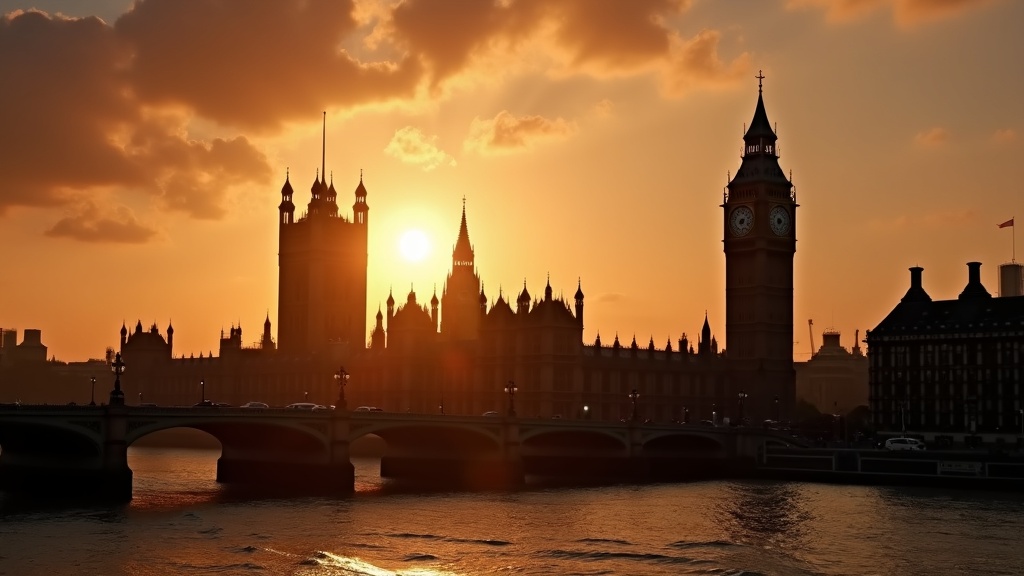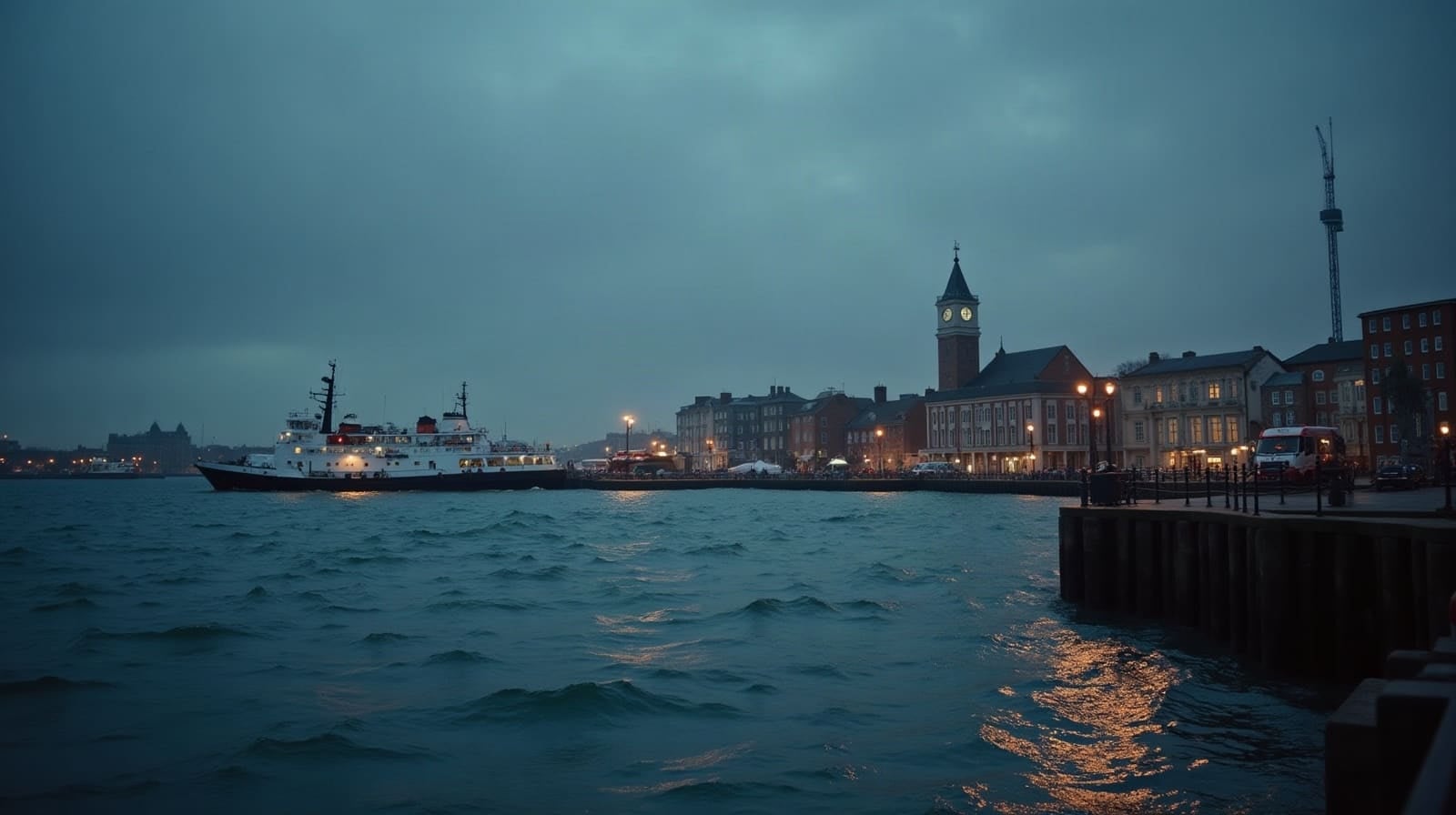
A boat came into the harbour
A boat was intercepted off the Portsmouth coast. It happened on 6 September. Inside were 140 people seeking asylum, a very large number for a single vessel which was described as a 'mega-dinghy'. The boat's approach towards the Hampshire shoreline triggered a major response. It was a significant operation. The Coastguard sent a helicopter. An aeroplane was also scrambled to monitor the situation from the air. Multiple lifeboats were launched from nearby stations to attend the scene, a substantial mobilisation of resources for one small boat crossing the Channel from France. This was not a routine event.
The 140 asylum seekers were brought ashore in the maritime city. They landed in Portsmouth. Their arrival was processed on site by officials under the watch of a growing crowd of onlookers. They were then taken by coach from the port. Their destination was Manston. This is the government's primary facility for processing small boat arrivals, located many miles away outside Ramsgate in Kent. Bringing such a large group of asylum seekers directly into Portsmouth is believed to be a first. The established pattern involves landings or interceptions along the Kentish coast. This arrival was different.
The protest started online. A far-right influencer began a livestream from the port itself, broadcasting the boat's arrival and calling for men to travel to the city. The response was fast. Hundreds of activists answered the call and came to Portsmouth. They gathered within hours of the initial alert, their sudden appearance transforming the operational zone of a rescue mission into a scene of confrontation on the streets. A government spokesperson later released a statement. It condemned the 'intimidating and thuggish behaviour' seen that evening. The speed of the mobilisation, directly linked to a single social media broadcast, revealed a new and volatile pattern. The crowd grew. The asylum seekers were moved away under guard. The city watched.
This was not a Kentish port
The arrival in Portsmouth was unusual. It broke a long established pattern. For years, the response to small boat crossings has been concentrated almost exclusively on a short stretch of the British coastline. The shortest route across the Channel ends in Kent. This is where the infrastructure is. Boats are intercepted in the Dover Strait and brought ashore there. From the beaches and small harbours of Kent, asylum seekers are then moved to Manston. The processing centre sits outside Ramsgate. That is the system.
This boat did not land in Kent. It was brought to a major naval city, many miles to the west. Portsmouth is not a typical destination for asylum seekers crossing the sea in small dinghies, it is the home of the Royal Navy. The decision to divert this vessel, with its 140 occupants, from the familiar Kentish corridor was a significant departure from all normal procedure. It is thought to be the first time a boat of this type and size has ever been brought into Portsmouth harbour. This was new.
Why the boat was brought here is unknown. Authorities have not explained the choice. The operational logic has not been made public. What is clear is that the decision placed the landing in a densely populated city, a location not equipped for or accustomed to processing asylum seeker arrivals directly from the sea. The standard procedure exists for a reason, concentrating resources and personnel in one area to manage a predictable flow of people. This event happened outside that system. The people on the boat still had to be taken to Kent. They were put on coaches for the long journey to Manston. The diversion to Portsmouth simply added a new location. A new flashpoint.
The protest was summoned online
The protest in Portsmouth was not organic. It was summoned. A single online broadcast brought hundreds of people to the city's streets on the evening of 6 September. The catalyst was a livestream. A far-right influencer started broadcasting as events at the harbour unfolded, providing a running commentary on the arrival of the boat and the 140 people on board. It was a direct appeal.
His message was simple. He called for men to travel to Portsmouth. That call was answered. The broadcast acted as a digital flare, seen by followers across the country who then began their journeys towards the south coast city. Hundreds of people arrived. They came within hours. This speed of mobilisation is a new feature of such protests, with the gap between an online call and a physical gathering closing to almost nothing. The event demonstrated how a lone actor with a smartphone can coordinate a significant real world response without any formal organisational structure.
The crowd gathered at the port. Their presence turned the operational challenge of the boat's arrival into a public order situation, one which unfolded live on the internet for the influencer's audience. This was not a local protest. It was a crowd drawn from elsewhere, brought to a specific point in Portsmouth by a targeted online campaign that reacted instantly to the news. The protesters were there because they had been told to be there, by a voice on a livestream which capitalised on the unusual decision to bring the asylum seeker boat into the naval base. The online world and the physical one collided. It happened very quickly. The result was a city facing a situation it had not planned for. The police were there. So were the protesters.
Smugglers are using larger boats
The vessel itself marks a departure. It was a single boat carrying one hundred and forty people. That is a significant number. Some reports quickly labelled it a 'mega-dinghy'. The description, though informal, points towards a shift in the physical nature of Channel crossings and the equipment being used by smuggling networks. This was not a small inflatable boat. It was something far larger, built or modified to accommodate a passenger load previously unseen on one craft. The boat was intercepted heading towards the Portsmouth coast, still out on the water. Its size alone guaranteed a substantial official reaction.
A major response was launched. The Coastguard sent a helicopter, an aeroplane and lifeboats to the location. The scale of this deployment indicates the level of risk authorities believed the vessel and its occupants were in, as recovering so many people from a potentially unstable platform at sea is a complex undertaking. It required serious assets. The operation was large. Its success, with all occupants brought to shore, hinged on a level of coordination reserved for major incidents. The need for such a response shows the strain a single large boat can place on rescue services.
The existence of such a craft suggests smugglers are altering their tactics. They may be moving towards a model of fewer but larger crossings. This approach consolidates their human cargo onto single vessels, possibly to maximise profit or to reduce the number of individual trips needed to be organised across the busy shipping lane. It is a strategic calculation. It is a deadly one. While a larger boat might offer a perception of greater stability, it also concentrates the danger. A single point of failure, whether a faulty engine or a structural collapse, places all 140 people in immediate and simultaneous peril. The potential for a mass casualty event is therefore magnified.
This new class of vessel presents a formidable challenge to British authorities. The RNLI and Border Force are now faced with boats that are far more difficult to manage at sea. Boarding and securing them is harder. Evacuating every passenger safely becomes a huge logistical task, especially with children or ill people on board. This incident stretched resources. The decision to bring the boat into Portsmouth, a port not set up for processing asylum arrivals, hints at the operational difficulties faced offshore. It may have been the closest safe harbour, a choice that bypasses the established facilities in Kent. This creates new flashpoints. It puts pressure on new places. If this becomes a trend, any large port on the south coast could find itself on the frontline without warning.
The government condemned the behaviour
The government reacted. It condemned the protest. A spokesperson described the events in Portsmouth on the evening of 6 September as 'intimidating and thuggish behaviour', a direct criticism of the hundreds of activists who had travelled to the city. This was a clear statement. The crowds had been summoned by a far right influencer's livestream, and their appearance on the streets represented a significant challenge for local police and for the authorities managing the arrival of the boat. The official condemnation sought to create distance between the government's own policies on immigration and the methods employed by the protesters on the ground.
While Whitehall issued statements, an operation was already under way. The 140 people were moved. They were taken by coach to Manston, the processing centre established on a former airfield outside Ramsgate in Kent which now handles almost all asylum seekers who arrive via small boats. That journey by road from Hampshire to the far corner of Kent is long, but its necessity reveals the fixed nature of the government's logistical arrangements for Channel crossings. The system is centralised. It is rigid. The entire national strategy for processing arrivals relies on that one site in Kent, creating a vulnerability when a boat lands somewhere else entirely.
This single event exposed the constraints on the government. It faces two distinct problems at once. There is the operational challenge of maritime rescues, which are becoming more complex as smugglers use larger and more dangerous vessels that force the coastguard to direct them to the nearest safe port, not the most convenient one. Then there is the political problem of managing public reaction, a reaction now capable of being mobilised into a physical protest within hours through a simple online broadcast. These pressures are separate. They converged in Portsmouth.
The official response was therefore twofold. The condemnation was for the public. The coaches to Manston were for the asylum seekers. Moving the 140 people was a practical decision, removing them from a volatile local situation and feeding them back into the only established system the country has for dealing with them. It was a choice born of necessity. It also showed how reactive the government's position has become, forced to respond to the twin stimuli of a smuggler's boat and an influencer's broadcast. The system has no flexibility. One unusual arrival demonstrated that.
Portsmouth is now a flashpoint
Portsmouth is now a flashpoint. The events of 6 September demonstrated a new and rapid method of mobilisation, turning a coastguard operation into a site of public disorder within hours. This changes things. The city is vulnerable. The combination of smugglers using larger boats that may be forced into any safe harbour, and online influencers ready to broadcast any such arrival, creates a template for future confrontations that could be activated almost anywhere.
It is a repeatable model. Any British port with the capacity to receive a large vessel could become the next stage for a similar protest, especially those outside the established small boat reception zone in Kent. The coastguard decides. Not the government. The nearest safe port is a maritime requirement, not a political choice, a fact which leaves the location of the next incident largely to chance and weather.
Local authorities in Portsmouth must now plan for events outside their control. They must prepare. Police need plans. Hampshire Constabulary and Portsmouth City Council will have to develop contingency plans for rapid response policing and public safety management around the commercial port and naval base. This will cost money.
For the government, the incident exposes the fragility of a national asylum strategy geographically concentrated on a single processing centre at Manston. The system has one point of failure. Portsmouth found it. The need to transport 140 people across two counties under the gaze of protesters shows the system has no resilience and no alternative location for initial processing, even on a temporary basis.
A serious attempt to prevent a repeat would require a fundamental rethink of how asylum seekers are processed upon arrival, potentially involving the establishment of multiple reception facilities to diffuse the focus from a single location. That is politically difficult. The government's condemnation of 'thuggish behaviour' addresses the symptom of the protest, but it does not address the underlying logistical vulnerability which the protest successfully exploited. The core problem remains. The playbook is now public. Until the government can process arrivals at more than one location, cities like Portsmouth will remain potential targets for disruption.
Sources. Guardian UK: Far-right protesters descend on Portsmouth after small boat arrival. Evening Standard: Hundreds of protesters descend on Portsmouth after 140 migrants rescued from 'mega-dinghy'.
Analysis. Drafted with AI assistance from the sources listed above and reviewed by an editor before publication. Jnews links to the organisations it writes about.