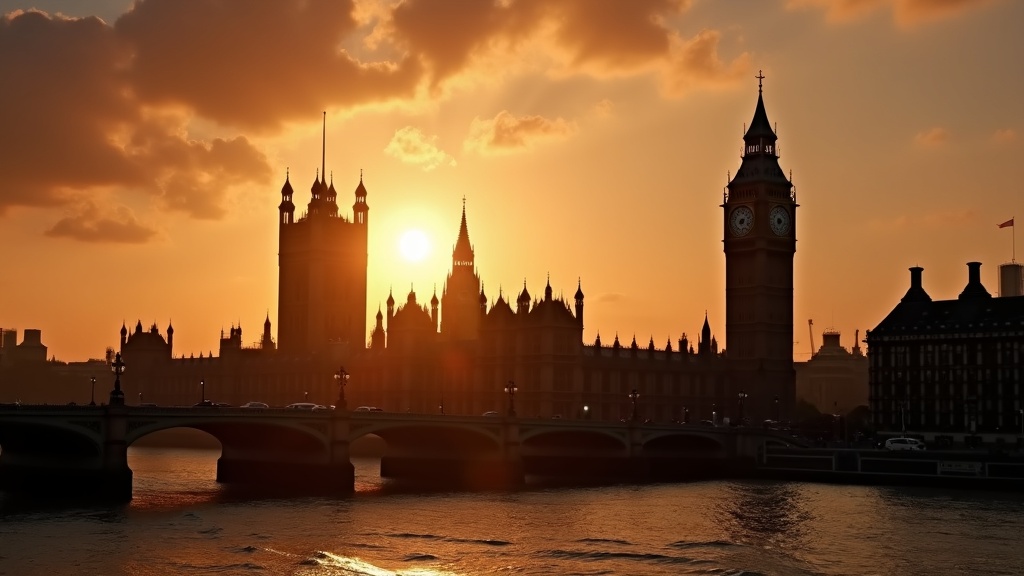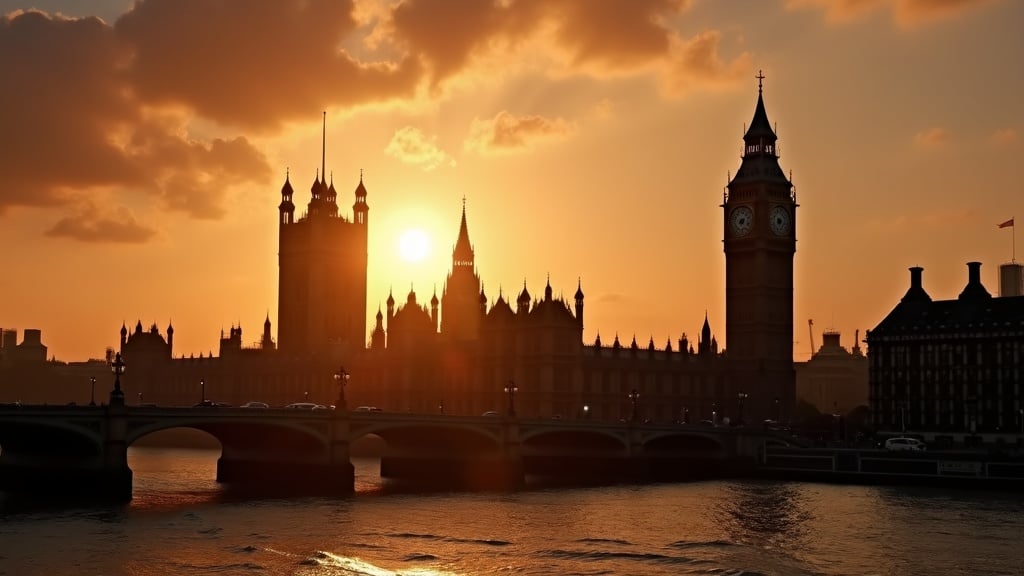
It is autumn
It is autumn. Today, 22 September 2026, marks the autumn equinox in the northern hemisphere, the moment the calendar and the cosmos align to signal the end of summer. The science is straightforward. This is the point in the Earth’s orbit when the sun shines directly on the equator, bathing both hemispheres in almost identical amounts of light. It happens twice a year. It is a fact of planetary physics, as predictable as the tide. A day and a night of nearly equal length.
This certainty is now a platform for something else entirely. It is a date circled in new diaries. In London, a city once governed by the rhythms of the market and the Underground, people are being offered unusual ways to observe the day. The city’s event calendars are filled with opportunities to mark the occasion. These are not scientific lectures. They are not history talks. They are attempts to find a modern meaning for an ancient solar event, a search for connection on a day defined by astronomical balance. The equinox is no longer just for astronomers.
The event itself is unchanging. The Earth does not care about our interpretations of its journey around the sun. Its axial tilt, a steady 23.5 degrees, dictates the seasons with a precision that predates all human civilisation. This celestial mechanism is the engine of autumn, a slow slide into longer nights and colder air that has governed life on this planet for billions of years. The process is mechanical. It is reliable. The feeling it provokes is not.
A simple astronomical event has become a hook for a modern mood. It is a search for significance. People are looking for something. The certainty of the sun's passage across the celestial equator now contrasts with a less certain desire for ritual, for nature, for a feeling of belonging to a cycle larger than a morning commute. The equinox provides a fixed point in a spinning world. What people choose to build upon that point says much about the country today. For science, it is a simple crossing point. For many Britons, it is becoming a destination.
The sun crosses the celestial equator
The Earth is tilted. This is not a new idea. It is the simple fact that organises our world into seasons, a constant lean of 23.5 degrees relative to its orbital plane. This tilt never changes. As the planet completes its annual 365 day journey around the sun, one hemisphere and then the other is angled more directly towards the solar glare, giving us the heat of summer and the chill of winter. The planet spins on. Its orbit continues.
Imagine the sun as the centre of a vast, flat disc. The Earth orbits on this disc, which astronomers call the plane of the ecliptic. For six months, the northern hemisphere is angled towards the sun. Its days are long. The sunlight is direct and strong. This is our summer. For the next six months, as the Earth travels to the other side of its orbit, the southern hemisphere receives the same treatment while the north is tilted away into its own cold and darkness. The cycle is predictable. It has run for four and a half billion years.
The equinox marks a point of transition in this journey. It is a moment of astronomical geometry. Picture another imaginary line. This one is the celestial equator, a projection of the Earth’s own equator outwards into the cosmos. Twice a year, as the Earth makes its circuit, the sun’s position appears to cross this celestial equator. It happens in March. It happens again in September. These crossings are the equinoxes, derived from the Latin for ‘equal night’.
On 22 September, the sun arrives at this crossing point. Its light falls not on the Tropic of Cancer or the Tropic of Capricorn but directly on the equator itself. For this one moment in time, the Earth’s constant tilt is perfectly sideways on to the sun, meaning neither hemisphere is tilted more towards or away from it than the other. This is the point of balance. The terminator, the line dividing day from night, passes through both the North and South Poles. Every part of the Earth receives the same amount of sunlight.
The day and night are not perfectly equal. The term is a slight misnomer. A day of equinox is actually slightly longer than twelve hours everywhere. This is because of two effects. First, the Earth's atmosphere refracts sunlight like a lens, making the sun appear above the horizon when it is geometrically still below it. Second, sunrise is officially defined not as the moment the centre of the sun’s disc crosses the horizon, but the moment its upper edge appears. The same is true in reverse for sunset. These two small facts add several minutes of daylight. It is a technicality.
The consequence is global. On this day, a person at the North Pole watches the sun skirt the horizon for twenty four hours, beginning six months of twilight and eventual darkness. A person on the equator sees the sun pass directly overhead at noon, a sight only possible on an equinox. From a research station in Antarctica to a flat in Aberdeen, the length of daylight is almost the same. It is a planetary alignment. It is a shared moment. The mechanics are simple. The implications are not.
This is an old tradition
This is an old story. A very old story. Before science gave it a name, the season had a different meaning. It was about survival. The harvest had to be brought in from the fields, a task that consumed entire communities before autumn rains turned the soil to mud and first frosts arrived to harden the ground. This was the final gathering of grain from the fields and fruit from the orchard, alongside the slaughter of livestock that could not be fed through the coming dark. The stores in the barn were the only difference between life and death. Failure was not an option.
Evidence is in the earth. It is in the stones. Long before the Romans or the Anglo Saxons, people in Britain were building monuments aligned to the sun. Stonehenge is the most famous example, its great trilithons framing the sunrise of the midsummer solstice and the sunset of the midwinter solstice with incredible precision. It is not the only one. From the Callanish Stones in the Outer Hebrides to the recumbent stone circles of Aberdeenshire, hundreds of neolithic sites, including stone circles, henges, and burial mounds, show a deep generational obsession with tracking the sun’s journey. These were agricultural people. Their calendar was the sky.
The solstices were the extremes. They marked the longest and shortest days. The equinoxes were different. They were the points of balance, the halfway markers in the sun’s annual journey up and down the horizon. While fewer monuments have alignments as obvious as those for the solstices, the day itself would have been significant for its pure astronomical symmetry. On the equinox, the sun rises due east and sets due west everywhere on Earth, providing a perfect navigational marker and a clear sign that the year was turning. For people who lived by the sun, such a day could not have passed unnoticed. It was a fixed point. A universal truth.
These ancient patterns persisted. They did not disappear. They were simply absorbed into new cultures and beliefs as they arrived on the island. Anglo Saxon calendars called September 'Hāligmōnaþ', which means holy month, a name suggesting a continued sacredness attached to the harvest season. Harvest festivals, celebrations of abundance and communal labour, became a cornerstone of the rural year for centuries, their dates clustering around the time of the equinox. These were not astronomical observations. They were practical events. They were a time for feasting, for markets, and for giving thanks for the food that would see the community through the winter. The festival was the final deep breath before the cold.
A new faith finds an old festival
The old sites are not empty. They are not just monuments. For some people, they are still active places of worship. Modern paganism has reclaimed them. These are new faiths. But they seek old roots. The autumn equinox is one of their most significant dates, drawing hundreds of believers to ancient stone circles and burial mounds across the country to mark a festival with a modern name, Mabon.
The name itself is new. It was coined in the 1970s. The American academic Aidan Kelly attached the name of a Welsh mythological figure to the autumn equinox celebration. Mabon ap Modron was a divine child. A prisoner stolen from his mother three nights after his birth. His story is one of light being taken into the darkness of the underworld, a narrative that resonated with the theme of the sun’s steady decline towards the winter solstice. The name stuck. It is now a fixed point in the modern pagan calendar, the Wheel of the Year, which formalises eight festivals around the solar and agricultural cycles of pre-Christian Europe.
For contemporary Druids and Pagans, Mabon is the second of three harvest festivals. It is a time for thanksgiving. It represents a point of perfect equilibrium, when day and night are of equal length, before the darkness finally begins to win out over the light. The rituals reflect this duality. People gather to share the fruits of the harvest, bringing bread, apples, root vegetables and cider to be blessed and shared in a communal feast. They give thanks. They also prepare. The festival acknowledges the need to prepare, both spiritually and practically, for the leaner months of winter, a time of introspection and rest. It is a festival of balance. It is also a festival of letting go.
These gatherings are most visible at Britain’s great neolithic sites. People travel to Stonehenge. They go to Avebury in Wiltshire and Castlerigg in Cumbria. At dawn on the equinox, robed Druids from groups like The Druid Order and the British Druid Order will lead ceremonies that are often open to the public. Their chants echo around the same stones that watched the sun rise due east on this day five thousand years ago. The atmosphere is quiet. It is reverent. This is not historical re-enactment. For the people who attend, from organised groups like the Pagan Federation to solitary individuals, this is a living act of faith. It is an attempt to connect with the land, their perceived ancestors, and the deep, undeniable rhythm of the turning seasons.
The market has found the equinox
Faith is not the only driver. The modern wellness industry has also found the equinox. It sees a significant commercial opportunity. This is a different kind of ritual. Across Britain, and particularly in London, companies are packaging and selling the season to a new audience, one that might not identify as Pagan but is seeking meaning outside traditional religion. The marketing language speaks of balance, gratitude and release. The transaction, however, is purely economic. These are not free gatherings at stone circles. These are premium, ticketed events.
The options in the capital are extensive. They are also expensive. One studio in Shoreditch offers an ‘Equinox Gong Bath’ for £50, held in a dark room filled with aromatherapy diffusers. In a luxury Notting Hill gym, a two hour ‘Harvest Balance’ yoga workshop costs nearly double that price, promising to help participants ‘align with nature’s rhythm’ under softly lit chandeliers. A different event combines a cacao ceremony with journaling prompts for £65. Its organisers advertise a safe space to ‘let go of what no longer serves you’. Corporate wellness providers are also active. They offer lunchtime mindfulness sessions in City offices themed around seasonal change, using the equinox as a metaphor for managing stress before the final quarter. The events promise ancient wisdom. They are delivered via booking apps and calendar invites.
This trend is not confined to London. It spreads. In the countryside, the commodification of autumn takes a different form. Foraging courses have become exceptionally popular. Guides in the New Forest and the Perthshire hills charge upwards of £90 per person to lead small groups on woodland walks. Participants learn how to identify edible mushrooms. They also learn to spot sloes and other late autumn berries. The goal is less about subsistence and more about the experience of connecting with the land. Restaurants have joined in. Chefs in cities like Manchester and Bristol now curate expensive equinox tasting menus that showcase seasonal produce. Dishes might feature local squash, while others focus on game or apples.
Where ancient Britons once gathered the real grain that would see them through the winter, their modern urban descendants might book a sourdough baking class themed around harvest abundance for £120. They are buying an experience. They are purchasing a feeling. It is a search for authenticity that comes with a price tag, a curated Instagram post, and a digital receipt. This is the experience economy meeting a simple astronomical event. The equinox is now a brand. It is for sale.
People are looking for something
A search is on. The revived interest in the autumn equinox is not one single trend. It is three. It is a scientific curiosity, a spiritual hunger, and a commercial opportunity all happening at once. These threads twist together. They suggest a country casting around for new rituals. For the first time, the 2021 census for England and Wales recorded that less than half of the population, just 46.2 per cent, described themselves as Christian. This decline in traditional religious observance has left a space. The old ways fade. New beliefs, and ancient ones repackaged for a modern audience, are now filling that void.
The movement is also a quiet reaction. It is a pushback against a digital life. The appeal of pagan ritual or a £90 foraging course is its physicality. It is tangible. It offers mud, cold air and the smell of damp earth. The impulse to stand on a hill as the sun rises, or to learn which berries to pick, appears to be a deliberate rejection of an existence mediated entirely by screens and notifications. It is a search for an experience that cannot be downloaded. It feels real. It is an attempt to connect with something other than a wireless network. People want to feel the turning of a season in their own bodies.
The equinox offers what a screen cannot. It offers certainty. The sun crosses the celestial equator on a predictable date. It is an anchor. The event provides a non negotiable, astronomical certainty in an era of contested facts and fluid identities, a fixed point in the calendar that arrives irrespective of human opinion or political turmoil. It gives the year a shape that many feel has been lost. It is a story. It has a beginning, a middle, and an end. The cycle is clear. For a growing number of people in Britain, this ancient rhythm is becoming more meaningful than the liturgical calendars that organised the lives of their ancestors. People are looking for something to mark the time. They are finding it in the sky.
Sources. BBC News UK: Autumn equinox 2026: When is it and what happens?. Evening Standard: Autumn equinox 2026: The best ways to celebrate it in London.
Analysis. Drafted with AI assistance from the sources listed above and reviewed by an editor before publication. Jnews links to the organisations it writes about.