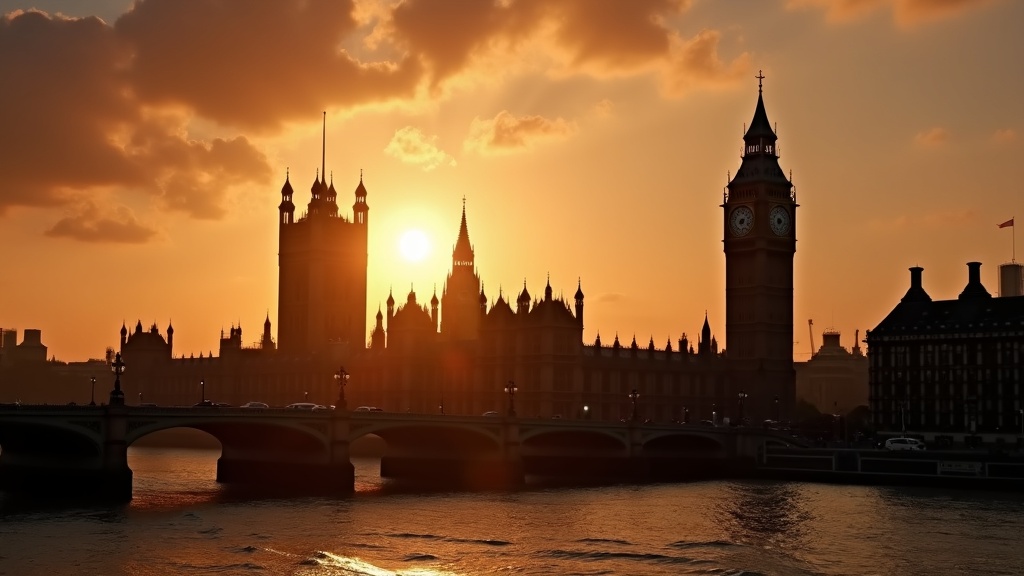
A meeting in New York
Andy Burnham is in New York. He is there for the United Nations General Assembly. This is his first visit as prime minister. He is scheduled to meet President Donald Trump.
The meeting will be their first. A British prime minister, forged in the politics of Manchester, sitting down with a New York property mogul. Two men from different worlds. The stated British objective is to find 'common ground'. That phrase comes from the prime minister himself, spoken to reporters on the plane journey across the Atlantic. It is an optimistic starting point for a negotiation with a president whose first term in office demonstrated a profound scepticism of historic alliances and a clear preference for bilateral, transactional deals which directly benefit the United States. Finding that ground will be a test.
For the United Kingdom, the stakes are considerable. Mr Burnham's domestic agenda is focused on making life more affordable for people at home, a promise he made on the flight to America. That entire project depends on a stable economy, one heavily influenced by the UK's relationship with its largest single trading partner. A difficult relationship with the White House creates economic uncertainty. It complicates security arrangements. A successful one could smooth the path for the next decade of British foreign policy and provide the stable international footing the prime minister needs to pursue his goals in Britain.
Before he sees the president, Mr Burnham will deliver a speech. He will address the assembly of world leaders. The subject is expected to be artificial intelligence. It is a modern topic for a modern problem. But the older challenges remain. The most immediate is in a private room, away from the UN debating hall. It is a meeting with one man. It could define an era. The search for common ground begins.
The man from Manchester
Andy Burnham’s political career was not forged in the corridors of international power. He is from Manchester. His reputation was built as a northern mayor, a regional leader often at odds with the national government in London. His battles were over local control, public transport, and giving a stronger voice to places far from the capital. This background defined him. It shaped his politics. Now he is prime minister, and the stage is global, requiring him to operate in a world of protocol and high stakes diplomacy that is a universe away from the town halls where he made his name.
His core message remains domestic. On the flight to New York, he told reporters his focus was on a plan for Britain's direction over the next ten years. He spoke of making life more affordable for people. He was direct. 'That is my main priority', he said. This is the promise that put him in Downing Street. It is the foundation of his government. Every action is meant to serve that single goal of easing financial pressure on households across the United Kingdom, an objective he links directly to national pride and future prosperity. He talks of what people are looking for. He believes it is security at home.
His current task seems a world away from that promise. He meets Donald Trump. The American president is a figure whose entire political strategy is built on an 'America First' platform, a protectionist ideology that challenges the foundations of the international order. President Trump’s first term saw a preference for unilateral action and a deep suspicion of multilateral alliances. Relationships were judged not on shared history but on immediate transactional value. For a British prime minister whose entire domestic agenda relies on the very economic stability that President Trump's protectionist instincts threaten, this presents a fundamental and unavoidable challenge to his core mission. It is a direct test.
This context explains his specific choice of words. It is why he feels the need to state, on a world stage, that Britain is not 'on the slide'. The message is for Trump. It is an assertion of strength before the negotiations begin, an attempt to frame the United Kingdom as an asset, not a liability. He supports this claim with data, pointing to the UK as the fastest growing economy in the G7. The message is also for home. It is a reassurance that his foray into global diplomacy is in service of their interests, a necessary step to secure the economic conditions required to make life more affordable. He is arguing that Britain's international standing and the cost of living in Bolton or Bristol are two sides of the same coin.
America's terms
America’s terms are known. They are the terms of the first Trump presidency, a political doctrine that reshaped global diplomacy by prioritising direct, measurable advantage for the United States over the maintenance of traditional alliances built on decades of shared history. The White House view is transactional. Every relationship is assessed on its immediate utility to American interests, a ruthless calculus leaving little room for sentiment or the idea of a 'special relationship' as understood in London. For Prime Minister Burnham, this means entering a room where goodwill is not a currency and past loyalty offers no credit for the future. He must prove Britain's worth. Now.
The president has always been deeply sceptical of the international institutions that have formed the bedrock of postwar foreign policy for countries like the United Kingdom. He sees them as a trap. Organisations like the United Nations, where Mr Burnham is speaking this week, are viewed from the Oval Office not as forums for cooperation but as stages for rivals to constrain American power and extract concessions from Washington. Alliances are conditional. The North Atlantic Treaty Organisation is a prime example, with President Trump consistently framing the defensive pact as a business arrangement where European members have historically failed to pay their way for the security guarantee provided by the American military. That pressure has not vanished. It defines the relationship.
This preference for direct confrontation over institutional process leads directly to a focus on bilateral trade deals. The president believes America wins in a one on one fight. He shuns multilateral agreements. The UK, having left the European Union’s single market, is uniquely exposed to this strategy and has been seeking a comprehensive trade agreement with Washington for years. President Trump sees this as leverage. He will expect significant concessions on market access, particularly for American agriculture, a sector whose standards have long been a source of deep concern for British farmers and consumers alike. The deal will be done on America's terms. The bargain will be hard.
Security cooperation is another matter. It is perhaps the only area where common ground is assumed rather than earned. The deep intelligence sharing partnership of the Five Eyes alliance is a cornerstone of western security that predates any single administration and is likely to endure. Yet even here, the transactional approach applies. Washington will expect London to be a reliable, and compliant, partner in its strategic priorities, whether in the Indo Pacific or concerning China. The price for continued security cooperation may well be political alignment on issues where British and American interests do not perfectly converge. Burnham must navigate this. The choices are stark.
The growth argument
Andy Burnham’s central economic claim is a simple one. He says Britain is the fastest growing economy in the G7. This message was delivered to reporters on the aeroplane to New York. The timing was not an accident. The statement is a clear piece of diplomatic stage management, a deliberate attempt to frame the narrative of Britain’s economic health before the prime minister sits down with an American president who is notoriously fixated on economic power and national prestige. Strength must be projected. Weakness must be denied.
Such statistical claims are always political. They can be sensitive to the chosen timeframe. A single quarter of strong performance can allow a leader to claim the top spot, even if the annual picture is less robust, just as a sharp rebound from a deep recession can produce a percentage growth figure that looks more impressive than sustained, steady expansion. The British economy endured a period of significant difficulty in the first half of the 2020s, marked by high inflation and stagnant output, creating a low base from which any subsequent recovery is measured. The baseline matters. The context is key.
The intended audience for this growth argument is not the United Nations General Assembly. It is one man. The audience is Donald Trump. His political philosophy divides the world into winners and losers, and he has consistently shown contempt for allies he perceives as economically weak or reliant on American goodwill for their security and prosperity. Burnham cannot afford to approach his first meeting as the leader of a nation 'on the slide'. That invites pressure. It invites contempt. The prime minister is therefore establishing the UK as an asset, not a liability, a confident G7 partner whose success makes it a more attractive ally for a transactional American leader.
This message of national economic vitality is also fundamentally linked to the prime minister’s domestic agenda. He defines his main priority as creating a ten year plan to make life more affordable for people in Britain. A successful relationship with the United States, anchored in a perception of mutual strength rather than British dependency, is seen as a route to achieving that goal. A favourable trade deal, something London has sought for years, or fresh American investment could provide the economic fuel Burnham needs for his government's projects at home. The claim is a means to an end. It is a political tool. The growth statistic is the opening bid in a long and difficult negotiation.
Where is the common ground?
Andy Burnham says he expects to find common ground. He believes it is possible. His team has pointed towards one specific area. Artificial intelligence. The prime minister’s speech to the United Nations General Assembly is expected to focus heavily on the technology, signalling its importance to his government. An AI partnership presents a vision of a modern special relationship, one built on shared high tech expertise and a mutual desire to shape the global standards for a transformative industry. This is the optimistic case. It is a path based on future opportunities. It paints a picture of two advanced economies working together.
There are other historic foundations for the relationship. The two countries share vast amounts of intelligence. That cooperation is deeply embedded. It has survived previous political storms. But shared goals in foreign policy are not guaranteed with a president who has shown profound scepticism towards international organisations and historic alliances. Donald Trump’s approach is transactional. A partnership on AI would not be a simple agreement between friends. It would be a deal. A negotiation. The White House would ask what is in it for America.
The price could be anything. It might involve concessions on a trade deal long sought by London, particularly on agricultural standards. It could mean public British backing for an American foreign policy decision that makes other European allies uncomfortable. For President Trump, alliances are not based on history. They are based on utility. He assesses allies based on what they contribute, either in economic terms or military spending. A technology partnership would need to be framed as an undeniable benefit for the United States. A clear American victory.
So while the prime minister talks of common ground, the ground itself is unstable. He must persuade a famously difficult counterpart that Britain is a valuable partner, not a dependent one. The special relationship is not a pre existing state. It is a concept that must be sold again. The hope is for a partnership of equals. The reality is that Andy Burnham is meeting Donald Trump on American soil, and he must work within the president’s own terms. The discussion will not be about shared values. It will be about concrete interests. It will be about the price.
What to watch for
The meeting will end. A statement will follow. The format of that statement will be the first and most important signal of whether Andy Burnham found his common ground with the American president. A joint press conference, with both men standing at lecterns side by side, suggests success. It implies a coordinated message. Separate statements do not. They indicate a meeting that was merely functional, or worse, one where no consensus could be found even on what to tell the public.
The details matter. The specific language will be crucial, with observers parsing the adjectives used to describe the talks for signs of warmth or formality. A firm commitment to a future state visit in London would signal a personal rapport was established between the two leaders, something the British side wants. Any mention of a concrete breakthrough on a bilateral trade deal would be the most significant prize of all. An inability to announce even a minor step forward, perhaps on regulatory alignment for artificial intelligence, would suggest the gap between the two leaders on major economic and security issues remains vast.
Silence can also be telling. The absence of these positive markers points to a different outcome. It suggests a conversation that was difficult. It suggests disagreement. It suggests the prime minister returns to Britain with little to show for his efforts beyond a photograph. This is not an end point. It is a beginning. This first encounter in New York sets the baseline for a new, and deeply uncertain, chapter in the relationship between Britain and its most powerful ally, one that will be defined not by historic sentiment but by cold calculation.
Sources. BBC News UK: Burnham expects to find 'common ground' with Trump in first meeting. Guardian Politics: UK not ‘on the slide’, Burnham to tell UN as he gears up for first meeting with Trump – UK politics live.
Analysis. Drafted with AI assistance from the sources listed above and reviewed by an editor before publication. Jnews links to the organisations it writes about.