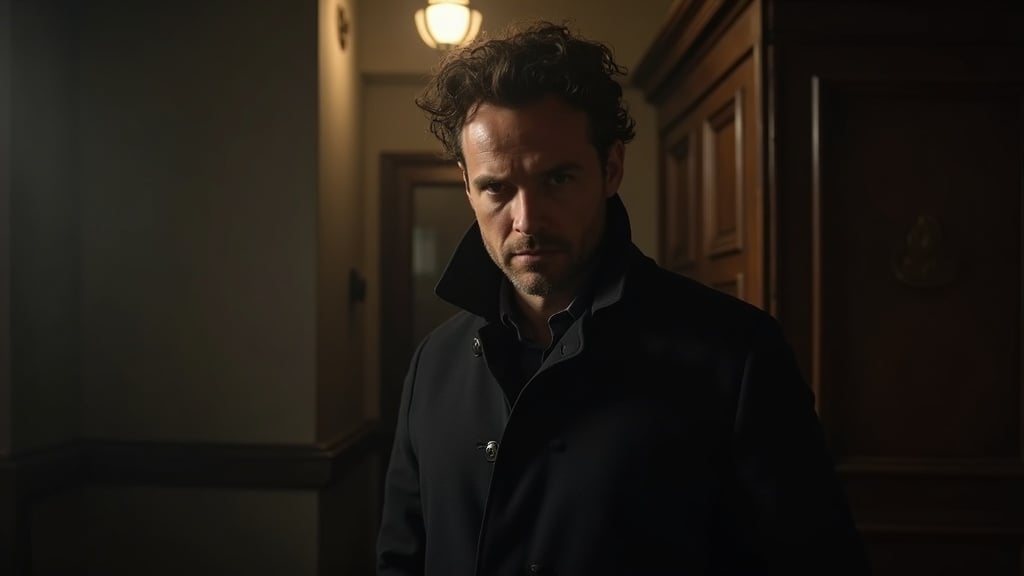
he BBC has announced a new Sherlock Holmes drama, starring Rafe Spall as the legendary detective. This adaptation arrives amid growing concerns about 'Sherlock fatigue' among fans and critics alike. The question arises: do we truly need another version of the super sleuth?
Sherlock Holmes, created by Arthur Conan Doyle in 1887, has become one of the most enduring characters in literature. His adventures, chronicled by Dr John Watson, have been adapted countless times across various media. The character's popularity shows no sign of waning, yet some worry that the market may be saturated.
The new BBC series will see Rafe Spall take on the role of Holmes. Spall, known for his versatile performances in films like 'Prometheus' and 'The Last Dragonslayer', brings a fresh face to the iconic role. The series promises to offer a unique take on the familiar stories, set against the backdrop of Victorian London.
Despite the character's enduring appeal, the announcement has not been met with universal enthusiasm. Some fans express concern about oversaturation, pointing to recent adaptations like the BBC's 'Sherlock' series starring Benedict Cumberbatch and Martin Freeman, which concluded in 2017. Others argue that Holmes's complex character and intricate stories provide ample material for new interpretations.
The debate over 'Sherlock fatigue' is not new. Each adaptation faces the challenge of offering something distinct while staying true to the essence of Doyle's creation. The new series aims to strike this balance by exploring lesser-known aspects of Holmes's life and character. The production team hints at a darker, more psychological approach to the material, focusing on Holmes's inner struggles and moral dilemmas.
This adaptation also comes at a time when period dramas are particularly popular. The success of shows like 'Peaky Blinders' and 'The Crown' suggests a strong appetite for well-crafted historical narratives. The BBC hopes that Spall's Holmes will tap into this trend, attracting both longtime fans and new viewers.
The announcement has sparked a broader conversation about the role of classic literature in modern media. Some argue that constant reinvention keeps these stories relevant, while others worry about diluting their original impact. The new Holmes series will serve as a test case for this debate, offering insights into audience preferences and the enduring power of Doyle's creation.
At stake is the reputation of both the character and the BBC. A successful adaptation could rejuvenate interest in Holmes for a new generation, while a misstep might reinforce fears of oversaturation. The production team faces the challenge of balancing respect for the source material with the need for innovation.
Viewers should watch for how the series handles Holmes's relationships, particularly with Dr Watson and Moriarty. These dynamics are crucial to the character's appeal and offer opportunities for fresh storytelling. Additionally, the visual style and tone will be key factors in determining the series' success.
As the BBC prepares to bring yet another Sherlock Holmes to screens, the debate over 'Sherlock fatigue' continues. Whether this new adaptation will invigorate the franchise or contribute to its perceived oversaturation remains to be seen. One thing is certain: the great detective's adventures will continue to captivate audiences, in one form or another.