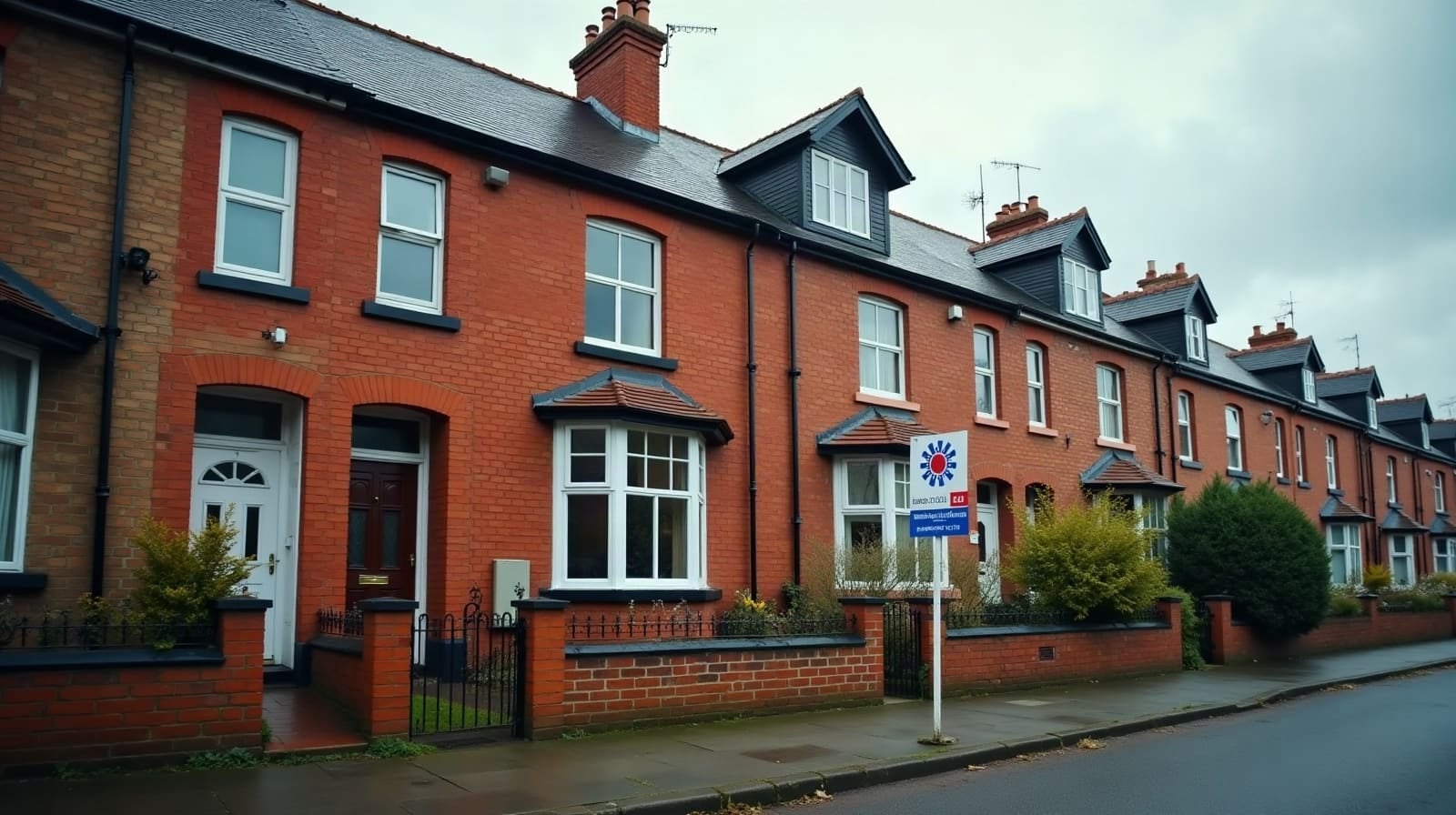
A fall of just £1,200
UK house prices fell in August. That is the headline from the lender Lloyds. The annual drop was 0.4 per cent. It is the first year on year decrease since November 2023, breaking a long streak of continuous growth that defined the post pandemic property market. The average home now costs £298,468. This is a small number. The actual cash difference from a year ago is just over £1,200 for a typical property, a sum that can be wiped out by a minor boiler repair or a solicitor’s bill. So this is not a collapse.
The picture is not simple. It resists easy summary. While prices are down compared to August last year, they are actually up since the start of 2026. Data from the same Lloyds report, reported in the Evening Standard, shows a marginal increase since January. This detail changes everything. It suggests the market has not fallen off a cliff but has instead plateaued, reaching a point of balance after years of frantic, often unsustainable, price inflation. Buyers and sellers are now in a standoff. The momentum is gone.
Consider the figures again. A drop of 0.4 per cent is statistically slight, almost a rounding error in a market where values have previously jumped by double digits in a single year. It feels significant only because of the direction of travel. For nearly three years, the only question was how high prices would go. Now, for the first time since late 2023, the question is whether they will fall further. This is a psychological shift. It matters. It introduces doubt into a transaction that for many people is the largest financial commitment they will ever make. The certainty has evaporated.
This is a moment of inflection. Nothing more. Panic is premature. The data points to a market that is pausing for breath, not one that is starting to hyperventilate. The annual fall grabs the headlines, but the slight rise since January provides the context. It means someone who bought a property at the start of this year may still be in positive territory, while someone who bought at the absolute peak last summer is now looking at a very small paper loss. The question now is whether this slight dip is simply a temporary blip caused by summer holidays and cautious buyers, or the first tremor before a more significant market adjustment. The data does not yet provide an answer. It only asks the question.
Interest rates begin to bite
Three factors are at play. Higher mortgage rates. Geopolitical uncertainty. Stretched affordability. These are the reasons Lloyds gives for the stall, a powerful combination of forces that has finally halted almost three years of uninterrupted price growth. The market’s engine has not seized. But the price of its fuel has become prohibitive for many would be buyers. People are being priced out.
The main force is the rising cost of borrowing, a direct consequence of decisions made in Threadneedle Street. As the Bank of England increased its base rate to fight inflation, commercial lenders passed those costs straight on to customers in the form of more expensive mortgages. The effect is immediate. It is painful. Consider the maths for a typical property, the one Lloyds values at £298,468. A buyer with a ten per cent deposit needs a loan of around £268,600. On a standard 25 year term, a mortgage rate of four per cent would mean a monthly payment of just over £1,400. That was yesterday's world. With new rates pushing towards six per cent, that same payment now climbs to over £1,700 a month. An extra £300 each month. It is £3,600 a year. This is not a small adjustment. For many households, that single change is the difference between a viable purchase and an impossible dream. The sums no longer add up.
This leads directly to the second factor. Affordability was already stretched. Prices were high. They have been for years. The ratio of average house prices to average earnings has been at or near record levels for some time, making it incredibly difficult for people to save a deposit or pass lenders’ affordability checks. The market was a tightrope. Higher interest rates have now added a strong crosswind, making the balancing act almost impossible for a growing number of prospective buyers. It is this group, the people who might have bought a year ago but now cannot, whose absence is being felt. Their demand has evaporated. This lack of new buyers entering the market removes a crucial layer of support for house prices, allowing them to drift downwards for the first time since November 2023.
The final factor is less tangible. It is uncertainty. The Guardian report mentions 'geopolitical uncertainty' as a contributing element identified by the bank. It is a vague term, covering wars, trade disputes and political instability abroad. Events far away create economic anxiety at home. When the future feels precarious, people and businesses become cautious. They delay big decisions. They put off major investments. Buying a home is the biggest investment most people will ever make, so a climate of global instability naturally encourages hesitation. Buyers wait. Sellers worry. Lenders may tighten their criteria. This collective caution acts as a drag on activity, slowing transactions and contributing to the flatlining prices seen in the latest data. It is the mood music to the hard numbers of interest rates. The feeling is one of caution.
This is not another 2008
The memory of 2008 is long. It haunts any discussion of falling house prices. A single negative number in a lender’s report can trigger deep seated anxiety, recalling images of queues outside Northern Rock and stories of widespread financial ruin. But this is not another 2008. It is not even close. The structure of the mortgage market, the very DNA of how money is lent against property in Britain, has been rewritten since that collapse. The system is fundamentally safer. The foundations are stronger.
Before the financial crisis, mortgage lending was a different world. It was a world of 100% mortgages, where buyers needed no deposit at all. Some loans even exceeded the value of the property. It was the era of self certification mortgages, often dubbed 'liar loans', where borrowers could simply state their income without providing any proof, an invitation for overstatement and overborrowing. The central assumption was that house prices would only ever go up, meaning any risky loan would soon be cushioned by rising equity. It was a pyramid of risk built on a foundation of optimism. When prices stalled and then fell, that entire structure came crashing down, taking homeowners and major financial institutions with it. Lenders had not properly tested if people could actually afford the money they were borrowing. That was the central failure.
Everything changed after that. Everything. Regulators, forced into action by the scale of the disaster, introduced a new regime. The key change came with the Financial Conduct Authority’s Mortgage Market Review in 2014. This was not a minor tweak. It was a revolution. It outlawed self certification. It mandated that lenders take full responsibility for assessing a borrower’s ability to repay, demanding detailed evidence of income through payslips and bank statements. Most importantly, it introduced mandatory affordability stress tests. This is the crucial difference between then and now. The stress test forces a lender to calculate whether a borrower could still make their monthly payments if interest rates were to rise significantly, perhaps by several percentage points above the initial deal rate. For the past decade, getting a mortgage has meant proving you can withstand a financial shock. It means the vast majority of borrowers currently in the system are there because a bank has already calculated that they can handle higher rates. They have been pre approved for difficulty.
This built in resilience is why today’s market is reacting with a small price dip, not a catastrophic implosion. The pain of higher interest rates is real, as discussed. It is preventing new buyers from entering the market. But it is not causing the kind of mass defaults and forced sales that defined the 2008 crisis. The borrowers are stronger. The loans are safer. The banks are more robust. The 0.4% annual fall reported by Lloyds is the sound of an orderly market adjusting to new economic realities. It is the creak of a well built structure settling, not the crack of a rotten beam about to give way. The panic of the past should not colour the reality of the present.
A market of winners and losers
An average figure hides a thousand different stories. For some, a falling market is a gift. For others, it is a curse. The 0.4 per cent annual dip reported by Lloyds is not a uniform event felt equally by everyone, it is a subtle shift in the ground that tilts the board in favour of some players while making it steeper for others. The consequences are fractured. They are personal. They depend entirely on where you stand, whether you are trying to get on the ladder, climb it, or simply hold on tight to your current rung.
Consider the first time buyer. The news looks good. At first glance. The average house price of £298,468 is roughly £1,200 lower than it was a year ago, a small but welcome discount in a market that has felt relentlessly expensive for years. Yet this price reduction is a mirage. The very same high interest rates that have nudged prices down have also made borrowing the remaining £297,000 vastly more expensive, with monthly mortgage payments climbing far higher than any saving on the sticker price. The front door is a little cheaper. The key to unlock it is not. This is the central paradox for aspiring homeowners, who find that just as the prize moves slightly closer, the cost of reaching for it has soared, leaving them stuck in the same frustrating position.
For existing homeowners looking to move, the situation is different. It is less dramatic. A widespread 0.4 per cent dip is largely neutral for someone selling one property to buy another in the same market. Their own home might be worth £1,200 less, but the larger house they hope to buy has likely seen a similar proportional decrease. The financial gap between the two properties, the crucial number that determines the size of their new mortgage, remains almost unchanged. Their challenge is not the small fluctuation in house prices. Their challenge is the affordability of that new, larger mortgage, a problem they share with the first time buyers. For these movers, the Lloyds report is little more than background noise. It is just data.
The real psychological impact is felt by a different group. It is felt by those who bought near the peak. Anyone who purchased an average home last year with a small deposit may now be in a precarious position. They may be in negative equity. This is a technical term for a simple, brutal reality. It means their mortgage debt is now greater than the market value of their home. While a 0.4 per cent drop is tiny, for someone who stretched every financial sinew to buy, it represents a paper loss of £1,200 and the tangible fear that this is just the start of a longer slide. They are not in immediate danger of losing their home, not with the lending safeguards now in place. But the emotional weight of watching your largest asset shrink in value, even fractionally, is immense. It transforms the dream of homeownership into a source of anxiety. It is here that the gap between a small financial statistic and its human cost is at its widest.
What to watch for now
The drop took analysts by surprise. It was a small shock. A poll of economists, conducted by Reuters before the Lloyds report was released, had forecast an annual price rise of 0.2 per cent. The actual result, a fall of 0.4 per cent, represents a significant swing from market expectations and suggests the economic headwinds are stronger than previously thought. This is not just a statistical revision. It is a change in direction. The question now is whether this is a temporary dip or the start of something more sustained, a puzzle that will be solved by watching three key areas in the coming months.
All eyes are on the Bank of England. Its next decision matters most. The Monetary Policy Committee will meet with this new housing data spread across their desks, one more piece of a complex economic picture they must interpret before setting the UK’s base interest rate. For months, the Bank has been raising rates to fight persistent inflation, a strategy that deliberately makes borrowing more expensive to cool down the economy. A fall in house prices, however small, is evidence that this painful medicine is starting to work. This presents a dilemma. Does the Bank continue its aggressive stance against inflation, risking a deeper property downturn, or does it pause its rate hikes to give the housing market some breathing room, potentially allowing inflation to remain elevated for longer? The stakes are high.
The answer to the Bank’s dilemma will depend heavily on the next set of inflation figures. Inflation is the problem. The Consumer Prices Index, the primary measure of how quickly the cost of living is rising, has become the most scrutinised economic statistic in the country. If the next release shows inflation falling back towards the Bank of England’s two per cent target, the case for holding interest rates steady becomes much stronger. It would be a relief. But if inflation proves stubborn, or even ticks up again, the pressure on the Bank to act decisively with another rate rise will be immense, regardless of the chilling effect on house prices. Future property values are therefore tied directly to the price of a weekly shop, a tank of petrol, and a winter energy bill.
The final variable is political. Do not forget the government. While the Bank of England controls interest rates, the Treasury controls fiscal policy, and a nervous housing market often attracts the attention of ministers. The current dip is far too small to trigger any kind of emergency response. But should this 0.4 per cent fall deepen into a more serious slide of several percentage points over the autumn and winter, the political pressure to intervene would grow substantially. We have seen it before. Past governments have used tools like temporary stamp duty holidays to stimulate demand, or schemes to support first time buyers. No such policies are currently on the table, but they remain in the political playbook, ready to be deployed if the government decides a falling market poses a greater threat to the economy than the risk of re-inflating another price bubble. It is a political calculation.
Sources. Guardian Money: UK house prices fall for first time in nearly three years, says Lloyds. Evening Standard: Average UK house price falls annually for first time since 2023 – Lloyds.
Analysis. Drafted with AI assistance from the sources listed above and reviewed by an editor before publication. Jnews links to the organisations it writes about.