A ship arrives from a colder sea
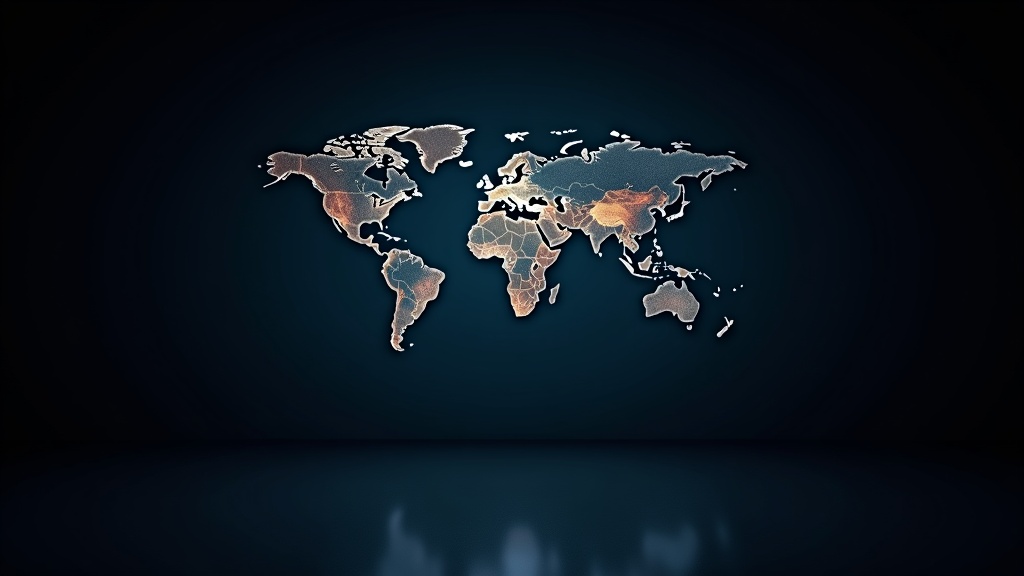
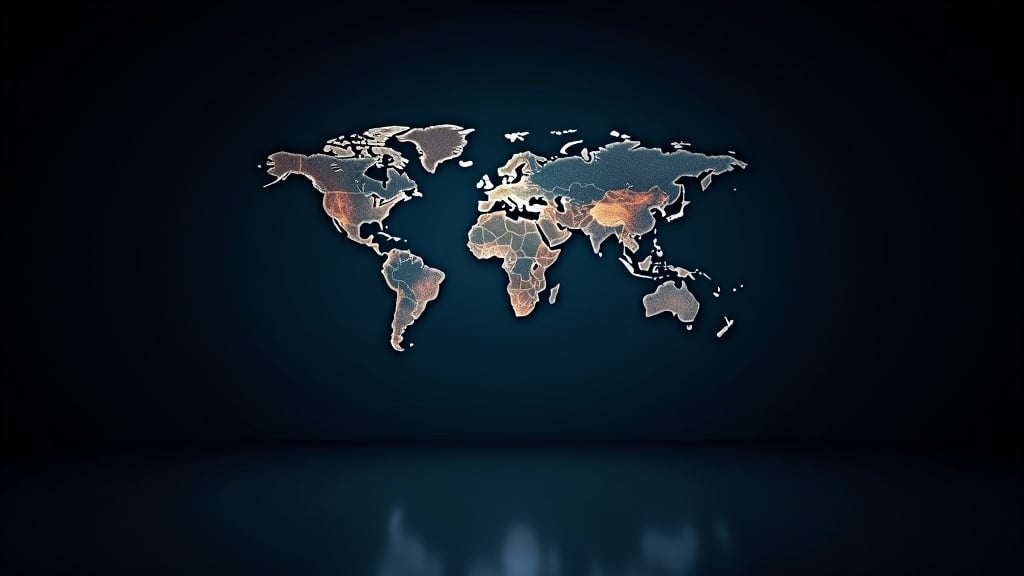
A container ship arrived in the United Kingdom on 9 September 2026. It sailed from China. The voyage was a landmark. For twenty five days the vessel moved through the cold waters of the Arctic Ocean, hugging the Russian coast along a path maritime planners call the Northern Sea Route. This journey heralds a profound shift in the mechanics of global trade, one driven by the warming of the planet itself. The ship did not pass through the Suez Canal. It did not cross the Indian Ocean or the Mediterranean Sea.
This was not an oversight. It was the entire point. The Arctic route represents a radical shortcut, one that could redraw the maps used in boardrooms from Shanghai to London. A journey through the Suez Canal, the dominant channel for Asian European trade for more than a century, is significantly longer. Shipping lines see a clear commercial prize in slashing transit times. Speed is money. The new route is not only about speed. It is also being presented as a potentially safer alternative to the traditional path through the Middle East, a region with its own deep seated sources of instability. The Suez Canal is a bottleneck. The world knows this.
The arrival in the UK was not a solitary experiment or a mere publicity stunt by its operators. It was a trial. The successful completion of this 25 day trip is intended to be the foundation for a regular, scheduled container service connecting European ports with Chinese manufacturing hubs. The voyage is over. The implications are just beginning. A new sea lane is becoming viable. It promises to reroute commerce. It brings with it a host of strategic calculations and severe environmental risks that were, until very recently, purely theoretical. The Arctic is opening for business.
Russia's tollbooth on the ice
This new commercial highway is a direct consequence of a warming planet. The Arctic is heating up. It is warming far faster than the global average. For centuries, the Northern Sea Route was impassable, a mariner's myth locked in perennial ice which rendered it useless for reliable trade. That is no longer true. The ice is melting. Its summer retreat has revealed a navigable channel, a window of opportunity that is widening with every passing year. This is not an act of human engineering like the digging of the Suez Canal. It is an inadvertent creation of the climate crisis itself.
The route is not an international free for all. It is Russian. The path hugs Siberia's coastline, running almost entirely through waters over which Moscow has asserted sweeping legal claims. The Kremlin treats the corridor not as an international strait, where principles of innocent passage might apply, but as an internal national waterway. This is a critical distinction. It grants Russia immense power. It allows Moscow to dictate the terms of transit, creating a new chokepoint in global commerce at the very top of the world. Russia is the gatekeeper.
Control is exercised in practical ways. Any foreign vessel wanting to use the route must secure permission from Russian authorities. It must also, crucially, use a Russian icebreaker escort for much of the journey. The state owns these escorts. They are not optional. Nor are they free. Shipping companies must pay transit fees for the service, turning the thawing Arctic into a direct and growing source of revenue for Moscow's treasury. Russia operates the world’s only fleet of nuclear powered icebreakers, a unique capability that provides it with a functional monopoly on guaranteeing passage through waters that remain hazardous and unpredictable. It is a polar tollbooth.
This combination of geography, legal assertion, and unique physical capacity creates a formidable new instrument of state power for the Kremlin. Russia sets the rules. It decides who can pass, when they can pass, and what price they must pay for the privilege of a faster journey from Asia to Europe. While other nations, particularly the United States, dispute the legal basis for these extensive Russian claims, the reality on the ice is one of Russian primacy. Moscow has established a new strategic asset. It offers economic returns. It provides political leverage. It fundamentally reshapes the geopolitical map of the high north. A new contest is beginning.
China's polar silk road
This single voyage is not an isolated event. It is a deliberate move in a much larger game. Beijing has a name for its Arctic ambitions. It calls it the Polar Silk Road. This project is the northernmost tentacle of the Belt and Road Initiative, a colossal programme of global infrastructure investment designed to bind the world’s economies closer to China. Beijing officially defines itself as a ‘near Arctic state’. It has no Arctic coastline. The claim is not geographical. It is political. The status is a declaration of intent, a manoeuvre to justify China's growing presence and investment in a region thousands of miles from its own borders and to secure a seat at the table where the future of the high north will be decided. China is inserting itself into the Arctic equation.
The logic is simple. It is about security. China is the world's factory, a trading nation utterly dependent on the sea lanes for its prosperity and survival. Today, the vast majority of its trade with Europe travels a long and vulnerable path, passing through critical maritime chokepoints like the Strait of Malacca and the Suez Canal. These are bottlenecks. They are policed by the United States Navy and its allies. For China's leaders, this represents a profound strategic weakness, an economic lifeline that a rival power could sever in a time of crisis. An alternative is required. The Northern Sea Route, for all its physical challenges and its reliance on Russian goodwill, offers just such an alternative. It is a bypass.
This new Arctic corridor promises a route free from the oversight of Washington and its partners. This is its primary appeal. The time saved is a commercial benefit, but the strategic calculation is paramount. The journey represents a step towards building resilience into the Chinese economy, diversifying its trade routes to reduce its exposure to potential geopolitical pressure points. Beijing is trading one form of dependency for another. It swaps reliance on American naval power for reliance on Russian icebreakers. It is a calculated exchange. China gets a new path for its goods, one that avoids its main strategic competitor. The voyage of this single container ship is therefore more than a commercial trial. It is a statement. It signals Beijing's long term plan to reroute not just its trade, but global power dynamics.
The environmental paradox
There is a deep and troubling paradox at the heart of this new Arctic passage. It is a route born of climate change. A warmer world melts the ice. The ships arrive. The very phenomenon that has opened this shortcut, the catastrophic and rapid retreat of Arctic sea ice, will be accelerated by the new traffic that exploits it. This is not a distant problem. Each new voyage on the Northern Sea Route, including this one, contributes to a feedback loop that makes the Arctic even more vulnerable than it was before. More ships mean more emissions, which mean a warmer Arctic, which means less ice, which means more ships. A vicious circle is created. The commercial logic of the route is predicated on the continued destruction of the environment it passes through. It is a system that consumes itself.
The most immediate danger is black carbon. Soot. These tiny black particles, spewed from the exhausts of ships burning heavy fuel oil, are a particularly potent agent of warming in the polar regions. When the particles fall on the pristine white surfaces of snow and ice, they darken them, reducing their ability to reflect sunlight back into space. The darkened surface absorbs more heat. The melting speeds up. This is a direct physical impact, a far more acute warming effect than that caused by carbon dioxide alone. A single ship’s journey leaves an invisible but damaging residue across the ice, hastening its own demise. As Russia seeks to expand traffic along the route to hundreds of voyages a year, the cumulative effect of this darkening soot could have a profound and irreversible impact on the remaining Arctic ice sheets. The route actively destroys the conditions that make it possible.
Beyond the atmospheric damage is the risk of a spill. The Arctic is not the English Channel. It is a remote, hostile, and ecologically fragile environment where help is thousands of miles and many days away. An accident here would be a catastrophe on a scale difficult to imagine. A spill of the heavy fuel oil that powers most large vessels would be almost impossible to clean up in the cold, dark, ice choked waters. The low temperatures would prevent the oil from breaking down naturally, while the shifting sea ice could trap it for years, making recovery operations a logistical nightmare. The unique marine ecosystem, from the plankton at the base of the food chain to the polar bears at its apex, is acutely vulnerable to such a disaster. A single mistake could poison a pristine environment for decades. It is a question of when. Not if.
Then there is the noise. To humans, the Arctic is a place of profound silence. For the whales, seals, and walruses that live there, it is a world of sound. Marine mammals like the narwhal and beluga depend on a quiet acoustic environment to navigate, to find food, to communicate and to find mates across vast distances. The constant, low frequency drone of a container ship’s engine is a brutal intrusion into this sonic world, masking the sounds the animals rely on for their very survival. This noise pollution causes chronic stress, drives animals away from vital feeding and breeding grounds, and can disrupt migration patterns developed over millennia. The ocean is getting louder. For the creatures of the high north, the arrival of global trade is a deafening roar that threatens to drown them out.
The west watches a new contest
This is not just trade. It is geopolitics. The arrival of a single container ship at a British port after a 25 day voyage redraws the strategic map of the world, forcing a response from western capitals that have until now treated the high north as a remote military concern. The core of the new contest is a legal dispute. It is an argument over water. Washington and Moscow disagree. Sharply. The United States views the Northern Sea Route as an international strait, a global commons subject to the rights of transit passage, a long held principle of American foreign policy designed to keep the arteries of seaborne commerce open to all. Russia asserts it is an internal waterway, entirely within its sovereign control, requiring permission, payment and pilots for any ship that wishes to pass through what it considers its own backyard.
This is a dangerous disagreement. For decades, the United States has conducted freedom of navigation operations to challenge what it sees as excessive maritime claims, sailing warships through contested waters to assert international law. It has done so in the South China Sea. It may do so in the Arctic. Moscow sees this differently. Russia has spent years and vast sums of money militarising its Arctic coastline, reopening a network of bases, airfields, and radar stations not seen since the Cold War. Its fleet of nuclear powered icebreakers is unmatched. It is a tool of both commerce and coercion that allows Russia to physically dominate the route it claims as its own. An American warship sailing the Northern Sea Route without permission would be seen in the Kremlin not as an assertion of law but as a direct military provocation. The ice is melting. The tensions are not.
The United Kingdom is caught in the middle. As a leading member of NATO and a nation historically reliant on the freedom of the seas for its prosperity, Britain shares Washington's commitment to open international waterways. Yet the ship arrived in a British port. The economic lure of a faster, cheaper route from Asia is powerful, promising to reduce shipping times for British businesses. This presents the government in London with a difficult choice between commercial advantage and strategic alignment with its closest ally. For NATO, the picture is even starker. The alliance now faces the prospect of a de facto Russo Chinese corridor opening on its northern flank. It is a new artery for trade, for resources, and potentially for military cooperation that bypasses all western controlled chokepoints.
China complicates everything. Beijing is neither a claimant to Arctic territory nor a primary party to the legal dispute between Moscow and Washington, a position which allows it to play both sides for its own benefit. It is Russia's partner. For now. By sending its ships along the Northern Sea Route, China legitimises Russia’s control and pays the required transit fees, providing Moscow with welcome revenue and a political victory. It simultaneously reaps the rewards of a new trade route that reduces its dependence on the Strait of Malacca, a naval chokepoint heavily influenced by the American navy and its partners. The Polar Silk Road gives Beijing options. It gives Beijing leverage. The new contest in the Arctic is not a simple two way rivalry. It is a complex, three sided game of strategy, economics, and geography, played out on a melting field of ice.
Sources. Sky News World: Container ship arrives in UK after landmark voyage from China via the Arctic. Independent UK: Container ship arrives in UK after 25-day voyage from China via Arctic shortcut.
Analysis. Drafted with AI assistance from the sources listed above and reviewed by an editor before publication. Jnews links to the organisations it writes about.