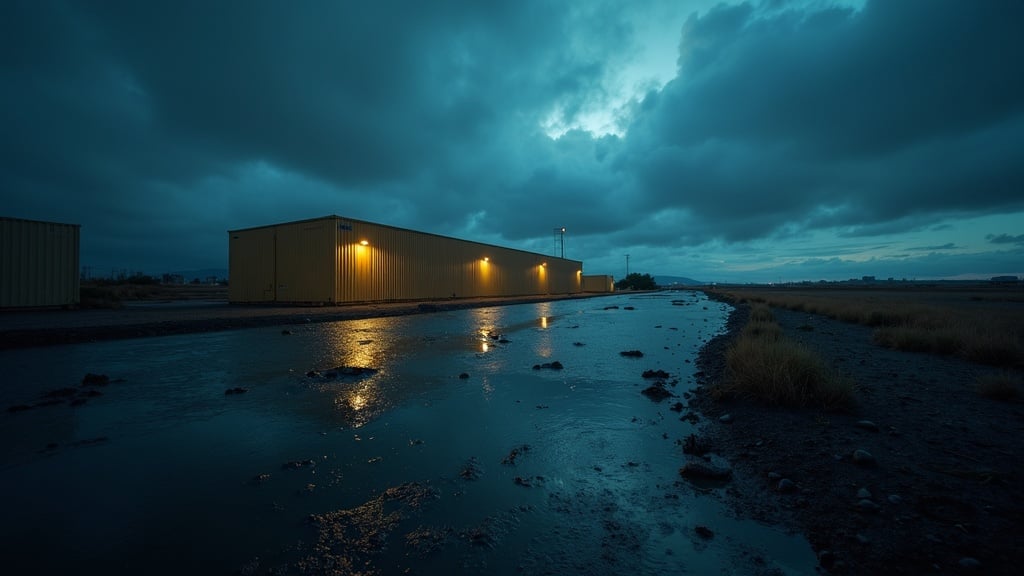
hile's ambitions to become Latin America's technology hub are clashing with the nation's worsening drought. The proliferation of datacentres, particularly around Santiago, is draining precious water resources and drying up wetlands. Rodrigo Vallejos, a law student, first noticed the problem five years ago at the Quilicura wetland, once one of Chile's largest swamps. "What you see here is a wetland without water," Vallejos observed. He and local activists have since uncovered that Quilicura is home to the largest concentration of datacentres in Latin America.
The issue is rooted in Chile's push to attract technology companies. The country offers tax incentives and a stable political climate, making it an attractive location for datacentres. These facilities require vast amounts of water for cooling servers. The Quilicura wetland, spanning 468.4 hectares, has borne the brunt of this demand. The wetland, partially protected, is now a stretch of dry, yellowed grass. Communities are pushing back, highlighting the environmental cost of Chile's tech ambitions.
Datacentres operate by generating significant heat from servers. To prevent overheating, they use water-based cooling systems. In Quilicura, this has led to a sharp decline in the wetland's water levels. Local residents and environmental groups argue that the datacentres are draining the wetland faster than it can replenish. The situation is compounded by Chile's ongoing mega-drought, the worst in a thousand years. The drought has reduced water availability across the country, making the impact of datacentres more pronounced.
The drying of the Quilicura wetland is not an isolated incident. Similar patterns are emerging in other parts of Chile where datacentres are concentrated. Environmentalists warn that the loss of wetlands will have broader ecological consequences. Wetlands serve as natural water filters and habitats for diverse species. Their disappearance threatens local biodiversity and exacerbates the effects of drought.
The conflict between technological growth and environmental preservation is clear. Chile's government and tech companies argue that datacentres are essential for economic growth and innovation. They point to the jobs and investment these facilities bring. However, critics argue that sustainable practices must be prioritised. They call for stricter regulations on water usage and more investment in alternative cooling technologies.
At stake is Chile's environmental future and its reputation as a sustainable destination for technology firms. The government faces pressure to balance economic interests with ecological preservation. Tech companies, too, are under scrutiny to adopt more responsible practices. Watching this dynamic will be crucial for understanding how countries can navigate the tensions between growth and sustainability in the digital age.
The outlook for Quilicura and similar wetlands depends on the actions taken by Chile's government and tech industry. Immediate steps could include implementing water-saving technologies in datacentres and restoring damaged wetlands. Long-term solutions may require a re-evaluation of Chile's tech strategy to ensure it aligns with environmental goals.